
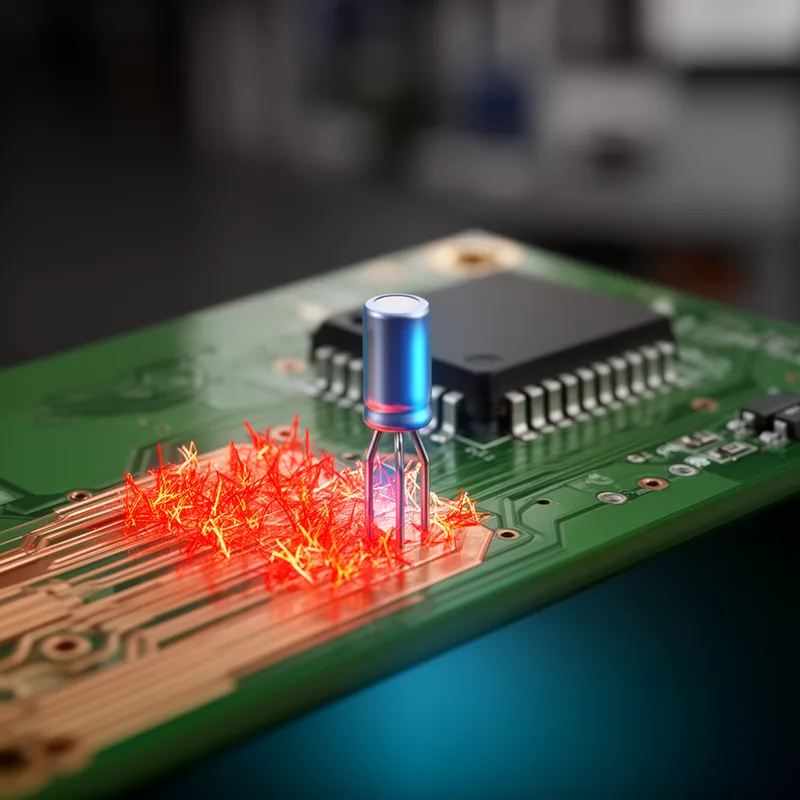
bypass capacitor
- noun
- /ˈbaɪpæs ˈkæpəˌsɪtər/
- Specialized
 :
condensador de derivación
:
condensador de derivación
- The engineer added a bypass capacitor to the circuit to filter out high-frequency noise.
Examples
-
To stabilize the voltage, the technician used a bypass capacitor in the audio amplifier.
-
During the testing phase, they noticed the bypass capacitor effectively reduced interference in the signals.
-
So you can't really be surprised that things like bypass capacitors for the CPU are just missing.
Synonyms

A small electrical part placed across power lines that lets high frequency noise flow to ground
Surface Forms
Morphology
The basic idea—a capacitor used to provide a 'bypass' or alternate path—is directly inferable from combining 'bypass' (divert/parallel path) and 'capacitor' (electrical charge device), so a learner could grasp the general functional relation. However, the precise technical meaning (a low‑impedance path for specific high frequencies to filter noise or stabilize voltage) requires specialist electronics knowledge and is not predictable from the words alone, so it is only partially transparent to a B1 learner.
Etymology
Bypass capacitor comes from the idea of a small part that gives a short bypass route for quick 'noise' on a power line and a capacitor is the part that lets those quick changes flow away. Think of it like a little side road for noisy traffic so the main road stays 'steady', which is why a bypass capacitor helps keep the power stable.

