

to bush out
- phrasal verb
- They have bushed out, cut them back, bushed out, cut them back.
Examples
-
These shrubs will bush out over time if they receive enough sunlight and water.
-
To encourage them to bush out, you should fertilize the plants during the growing season.
-
If you prune these plants regularly, they will bush out beautifully in the spring.
Synonyms


 1
8.4
1
8.4
To spread out into many branches like a tree or its roots
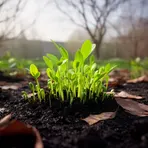
To begin to grow quickly, often as new shoots or leaves
Antonyms

How Bushy

Surface Forms
Morphology
The meaning 'to grow outward and develop many branches' is directly derivable from 'bush' (a small woody plant) combined with the particle 'out' indicating outward expansion; this matches productive English patterns like 'branch out' or 'fan out'. Converting the noun into a verb meaning 'become bushy' is a regular, compositional operation, so a B1 learner who knows the constituents should be able to infer the meaning.
Etymology
The phrasal verb bush out comes from gardening: when a plant sends new stems and leaves outward it becomes a bush and spreads out, so gardeners often pinch the top shoots to help it 'grow fuller'. That's why bush out means 'to grow outward and develop many branches'.