
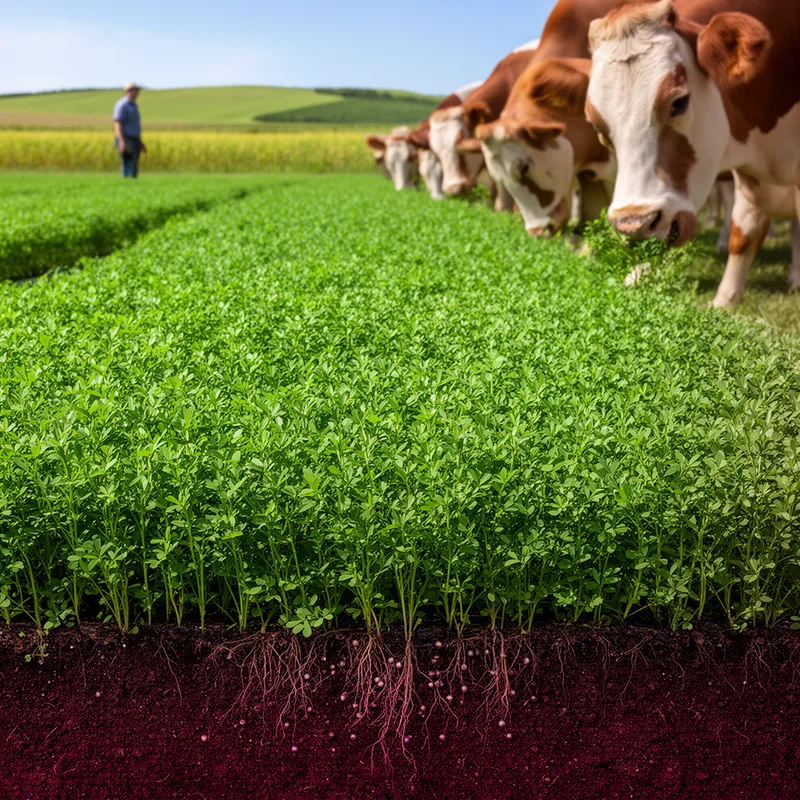
bush clover
- noun
- /bʌʃ ˈkloʊvər/
- US
- Farmers often plant bush clover to improve the soil quality and support local wildlife.
Examples
-
The fields were covered with wild bush clover, attracting many pollinators in the summer.
-
Farmers in the region often plant bush clover to help restore soil fertility.
-
She identified the low-growing bush clover as a valuable forage crop for cattle.
-
The bush clover grows well in warm climates.
-
Farmers often plant bush clover for its soil improvement benefits.
-
The livestock enjoyed grazing on the nutritious bush clover in the pasture.
-
In the southern United States, bush clover is commonly used as a forage crop during the growing season.
Synonyms
A plant grown for animal feed and to improve soil, often cut for hay
Surface Forms
Morphology
The compound 'bush clover' is directly interpretable as a type of clover that is bushy or shrub-like, so a learner who knows 'bush' (small woody plant) and 'clover' (a small fodder plant) can infer it refers to a shrubby clover used for forage. Noun–noun compounds of this descriptive type are common and cross-linguistically regular, making the meaning accessible to a B1 learner familiar with the constituents.
Etymology
Bush clover comes from how the plant looks and how people used it. It grows like a small bush and has leaves like true clover, and because farmers used it as 'animal feed' and to help the soil, the name came to mean 'a plant that grows like a small bush and is used for animal feed and to help the soil'.

