
buckbrush


 1
8.6
- noun
- /ˈbʌkˌbrʌʃ/
- US
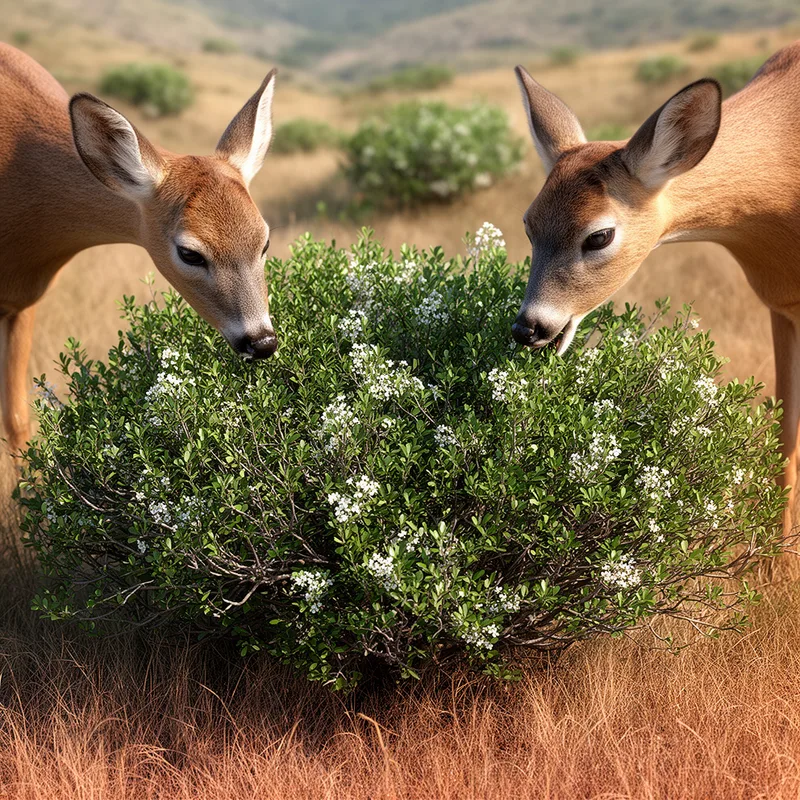
- Deer often browse on buckbrush in the forests during the winter months.
Examples
-
The buckbrush shrub provides excellent cover for wildlife in grassland areas.
-
But usually, wood ducks, flooded pin oaks, duckweed, and buckbrush all went together like little kids and trick-or-treating.
Blog text (23) -
Buckbrush, for example, with its long pliable runners suitable for weaving, made an excellent basket-making material.
Academic text (2011) -
Susan C. Power, in Art of the Cherokee, identifies the replacement: "After removal, Cherokee women began using buckbrush as a basket-making material in Indian Territory, where the traditional rivercane was no longer readily available."
Academic text (2011) -
In many regions, buckbrush is a common sight among the underbrush in wooded areas.
Surface Forms
Morphology
Etymology
The word buckbrush comes from two plain English words: buck ('male deer') and brush ('thick small trees or shrubs'). It names the shrubs that deer eat and hide in, so the origin explains why the word refers to a North American shrub often found in forests and grasslands.