
bruxism


 1
9.6
- noun
- /ˈbrʌksɪzəm/
- Specialized
- Many people are unaware that they suffer from bruxism until they experience tooth sensitivity.
Examples
-
There are many health problems associated with daily stress, and bruxism, a clenching or grinding of the teeth, is one of them.
Blog text (13) -
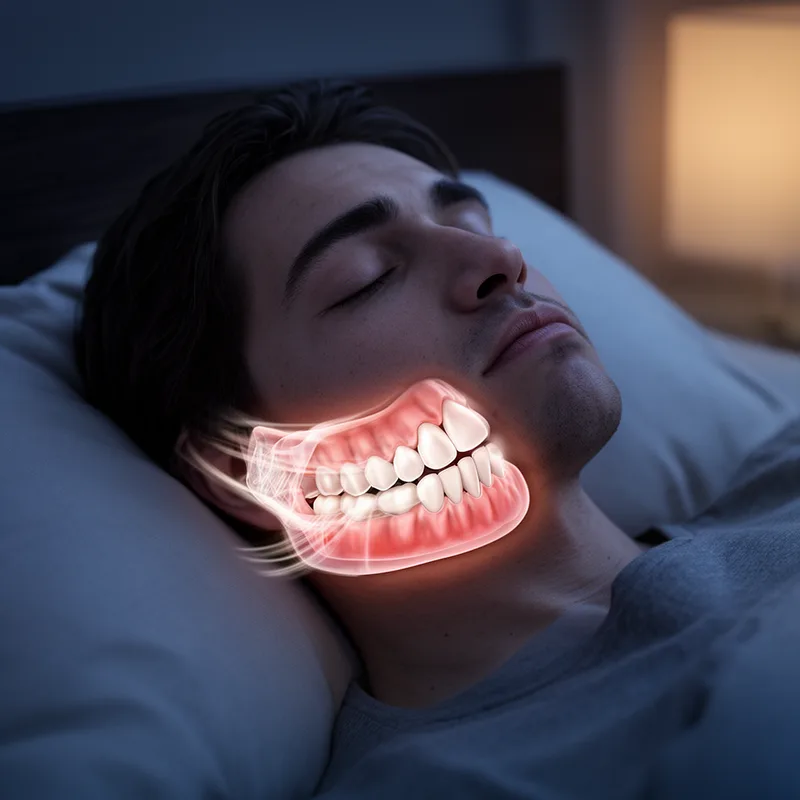
If you have bruxism, you may unconsciously (or consciously) clench your teeth together during the day or grind them at night, which is called sleep bruxism.
Blog text (13) -
Bruxism may be mild and may not even require treatment.
Blog text (13) -
I was wondering if you had any insight into a nutritional link to bruxism.
Blog text (27) -
Bruxism is when you clench or grind your teeth.
Blog text (13) -
If you have bruxism, you may unconsciously (or consciously) clench your teeth together during the day or grind them at night, which is called sleep bruxism.
Blog text (13) -
Excluded were patients that suffered from bruxism, poor oral hygiene, or periodontal diseases, as well as adolescent patients with (presumably) large pulp chambers.
Academic text (2016) -
Bruxism often occurs during sleep, leading to bruxism and discomfort.
-
If you wake up with a sore jaw, it might be a sign of bruxism, the grinding of your teeth at night.
Surface Forms
Morphology
bruxism = brux + ism
The root 'brux' is a specialized combining form (not a standalone English word), so the meaning 'teeth grinding' is not deducible by an average learner from familiar English morphemes; '-ism' simply marks a condition.
Etymology
Bruxism comes from an old Greek verb brychein, which means 'to gnash' or 'to grind'. So bruxism is the name for the condition of clenching or grinding your teeth, often while you sleep and without knowing it.