
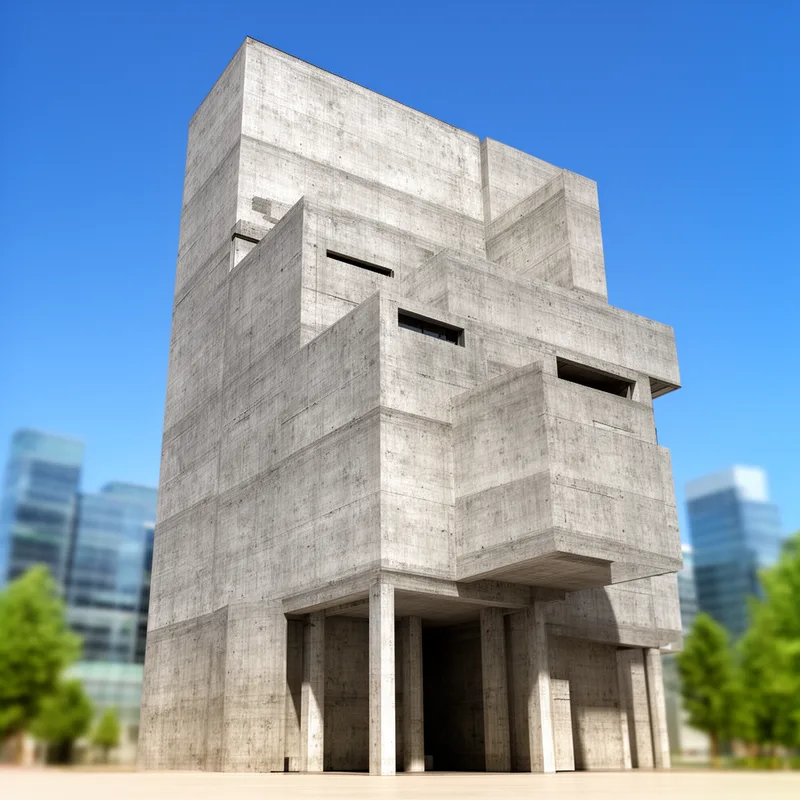
brutalism


 1
7.5
- noun
- /ˈbruːtəlɪzəm/
- Specialized
- Some of the students favor, as his illustration exemplifies, a kind of industrial brutalism that reminds one of the history of the site and links one to the harsh city to the west.
- New Brutalism
Examples
-
Brutalism may have never caught on like other architectural styles, but it's an effective style for some uses, like university or administrative buildings.
Blog text (16) -
"Ultimately, it was Brutalism's refusal of abstract concepts and its use of concrete images -- images that can carry the mass of tradition and association, or the energy of novelty and technology, but resist classification by the geometrical disciplines by which most other exhibits were dominated -- that, for Banham, represented the authenticity of the movement."
Academic text (2003) -
If I were an architect in the 1950s and it was wall-to-wall Bauhaus grids, Brutalism would have been a cool glass of water on a hot day.
Blog text (16) -
Many people appreciate the bold aesthetic of brutalism in modern architecture, especially in public buildings.
-
The brutalism of the new library design is evident in its use of raw concrete and stark lines.
-
Critics often argue that brutalism lacks warmth, preferring softer architectural styles instead.
Surface Forms
Morphology
Etymology
Brutalism comes from the French phrase béton brut, which means 'raw concrete'. Even though it sounds like the English word 'brutal', the name really points to buildings with a rough, honest look made from bare concrete, so brutalism is a style that uses bare materials and simple shapes without decoration.