
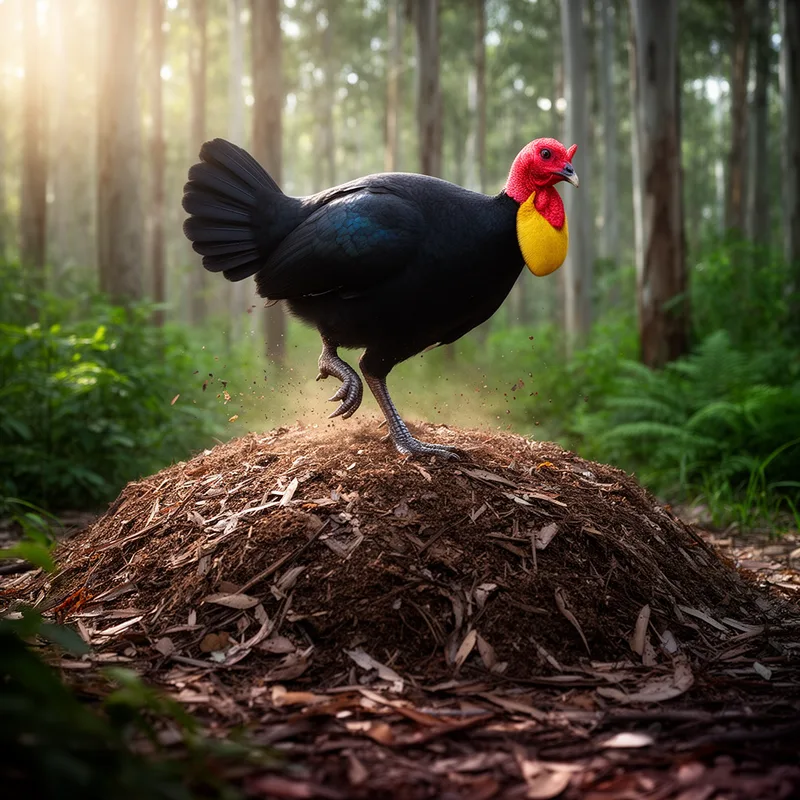
brush turkey
- noun
- Australian
- The brush turkey uses leaves and twigs to construct enormous nesting mounds in the forest.
Examples
-
In Australia, the brush turkey is recognized for its unique behavior of incubating eggs in large mounds of soil and organic material.
-
But the composition and structure of the eggshell do suggest that the female may have placed vegetation on top of the eggs, as alligators and mound-building birds such as brush turkeys and mallee fowl do today.
Academic text (2002) -
As autumn approaches, the brush turkey can often be seen foraging for food around the forest floor.
Synonyms

A large black bird from Australia and New Guinea that lives in forests

A group of large ground birds like brush turkeys from Australia that build large nest mounds
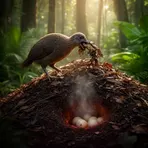
A large ground bird that builds a warm mound of rotting plants to hatch its eggs
Surface Forms
Morphology
The compound combines 'brush' (thicket/wooded vegetation) + 'turkey' (a large bird) to denote a bird associated with brushed/wooded areas, so a B1 learner who knows both words can infer it is a bird living in brush. Although biologically it is a specific megapode and not a true turkey, the habitat-based naming is compositional and predictable for learners.
Etymology
Brush turkey is a name that comes from how people saw the bird: it lives in the brush, meaning thick bushes, and looks a little like a turkey. The clear image of a large bird scratching in the bushes and building big mounds helps explain why brush turkey means 'a large ground bird that lives in bushy areas'.

