
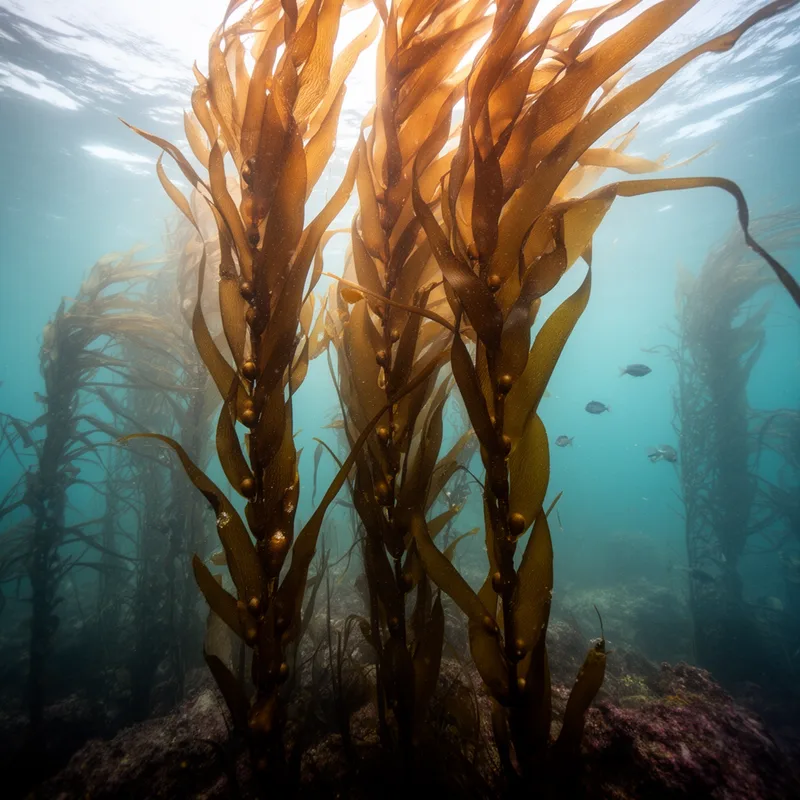
brown algae
- noun
- /braʊn ˈælɡi/
- Specialized
- During our dive, we observed various species of brown algae swaying gently in the current.
Examples
-
The brown algae in this area are crucial for marine life.
-
Many coastal communities rely on brown algae for food, shelter, and erosion protection.
-
Kelp forests, made up of brown algae, support diverse fish and invertebrate populations.
-
Researchers extract alginates from brown algae to test their potential in wound dressings and gels.
-
Many species of brown algae thrive in cold waters.
-
The brown algae in the tide pools created a rich habitat for many marine animals.
-
Brown algae, commonly found along rocky shorelines, are vital for marine ecosystems.
Surface Forms
Morphology
The meaning 'a group of algae that are brownish in color' is directly and transparently derived from combining 'brown' (a colour adjective) with 'algae' (plant-like organisms). This adjective‑noun descriptive pattern is a basic, cross‑linguistic composition that a B1 learner who knows both words would readily understand.
Etymology
Brown algae comes from a simple picture: the word brown describes the brown and yellow colors that hide the green, and algae means plants in the sea. So, brown algae is the name for large 'seaweeds' such as kelp that look 'brownish' or 'olive' today.

