

to bristle up
- phrasal verb
- The mongoose's hair bristled up, and it grinned to show its teeth, appearing dangerous, but I knew it was just madly scared.
Examples
-
When the manager critiqued his work harshly, he could feel himself bristle up with anger.
-
She bristled up at the suggestion that she wasn't qualified for the position.
-
The audience began to bristle up when the speaker made offensive remarks.
Synonyms

 33
4.1
33
4.1

To give an angry look to show you do not like something
 19
7.0
19
7.0
To react with sudden anger or offense
 8
7.4
8
7.4
Show sudden anger or annoyance because of something someone says
 1
8.4
1
8.4
To feel offended when someone says or does something you dislike
 1
9.0
1
9.0
To show sudden anger or feel offended, often by becoming stiff

To react angrily and show offended pride when criticized

Show your teeth to look angry and warn someone
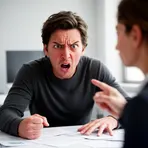
To become angry or upset

To become very annoyed or frustrated by something small and repeated
Antonyms


How Angry

Surface Forms
Morphology
The verb 'bristle' already denotes showing sudden anger or offense, and the particle 'up' commonly signals an increase or inchoative change, so 'bristle up' meaning 'to become/show anger suddenly' is directly predictable from the parts. This verb+up compositional pattern is common in English (and mirrored cross-linguistically), so a B1 learner who knows both constituents would likely infer the meaning.
Etymology
The phrase bristle up comes from the image of short, stiff hairs called bristles standing up on an angry or scared animal. When a person suddenly acts like those raised bristles, looking hard, prickly and defensive, they 'show anger' or 'take offence', so bristle up means 'to show anger or take offence'.