
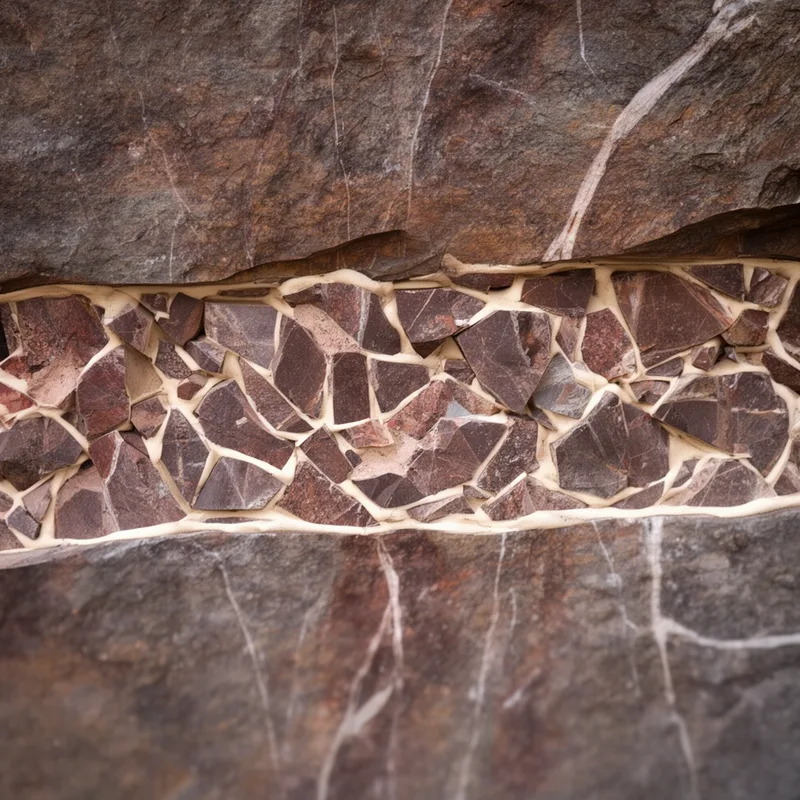
brecciation


 1
9.9
- noun
- /ˌbrɛʃiˈeɪʃən/
- Specialized
- The brecciation of the rock was evident in its angular fragments.
Examples
-
Geologists studied the patterns of brecciation to understand the region's seismic history.
-
The brecciation of the rock layer was caused by intense tectonic activity.
-
Evidence of brecciation can be seen in the angular fragments within the sedimentary deposit.
-
Brecciation occurs frequently in volcanic regions.
-
The geologist explained that brecciation occurs when rocks break into angular fragments due to natural processes.
-
During the study of geological formations, they observed brecciation where large boulders had shattered into smaller, jagged pieces.
-
The rock sample displayed clear signs of brecciation, with sharp, broken edges indicating its history of intense geological activity.
Surface Forms
Morphology
Etymology
Brecciation comes from the Italian breccia, which means 'rubble' or broken stones. So brecciation is the process of turning solid rock into many sharp pieces or 'rubble', and that is why geologists use the word for rock made of broken fragments.