
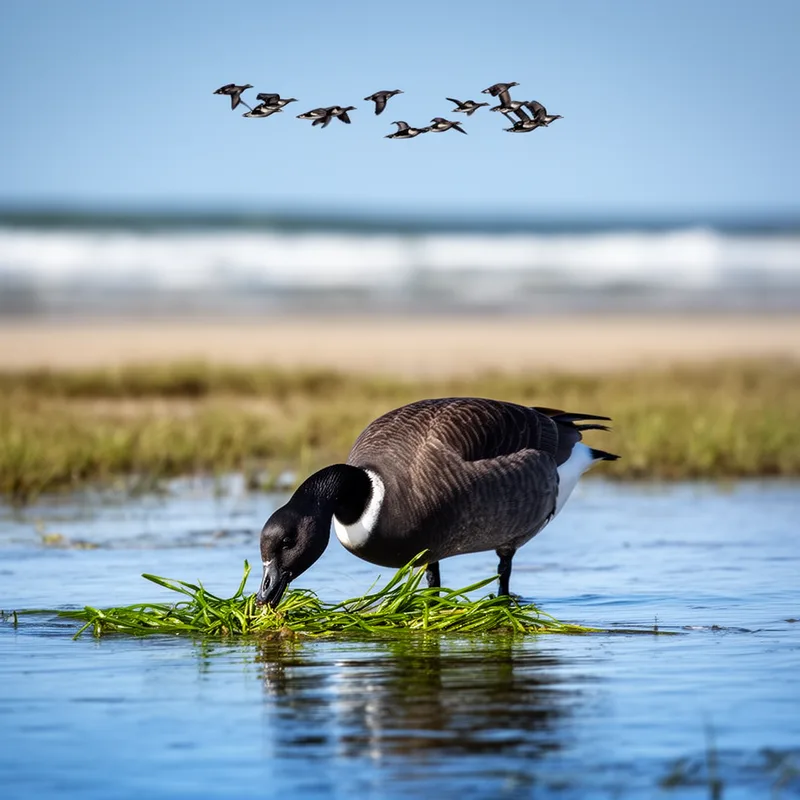
brant
 3
9.3
3
9.3

- noun
- /brænt/
- US
- Each spring, the brant returns to its breeding grounds in the northern tundra.
Examples
-
I saw a flock of brant geese flying south for the winter.
-
The brant is known for its distinctive dark coloration and unique honking sound.
-
A Poet of Public Occasion: Elegies for Red Jacket and Brant.
Academic text (2017) -
The poem documents Brant's historic loyalty to the Crown.
Academic text (2017) -
One traveler noted that he "met Joseph Brant one morning on the American side of the border, dressed in fine western attire."
Academic text (2017)
Synonyms
A small dark-bellied wild goose that lives on Arctic and temperate coasts

A small dark goose that breeds in the far north and flies south for winter

A small dark goose that breeds in the Arctic and flies south in winter

A small dark goose that breeds in the Arctic and flies south for the winter

A small dark bird that lives on northern coasts and eats sea plants
Compounds
Surface Forms
Etymology
The word brant comes from an old Norse name brandgás, which meant 'burnt goose' because the bird has very dark feathers. So, think of a brant as a 'burnt' or very dark goose, and that image helps explain the modern name.