
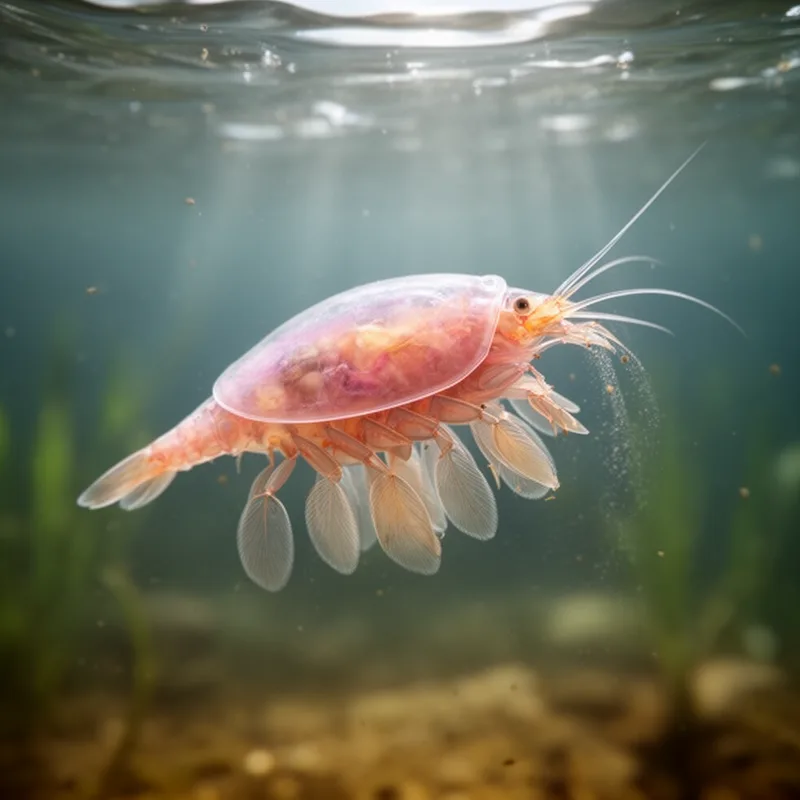
branchiopod crustacean
- noun
- /ˈbræŋkiəˌpɒd krʌˈsteɪʃən/
- Specialized
- The carapace and leaflike appendages distinguish a branchiopod crustacean from other aquatic species.
Examples
-
The fairy shrimp is a well-known branchiopod crustacean found in temporary ponds.
-
Many branchiopod crustaceans inhabit freshwater lakes.
-
Scientists study branchiopod crustaceans to understand adaptations to freshwater habitats.
-
The branchiopod crustacean swam gracefully in the water.
-
The fairy shrimp is a well-known branchiopod crustacean that thrives in temporary ponds.
-
Many branchiopod crustaceans can be found in freshwater lakes, showcasing diverse adaptations.
-
Scientists study branchiopod crustaceans to learn about their unique swimming and feeding mechanisms.
Synonyms

A small crustacean that lives in fresh or salt water and has many leaflike limbs for swimming and feeding
A small water animal with a hard shell and many flat legs used for swimming and breathing
Surface Forms
Morphology
This is a straightforward noun-noun subtype compound where 'branchiopod' specifies a particular kind of 'crustacean'; if a learner knows both constituent meanings they can compose them to get the full sense. The construction follows a common English pattern for naming types (X Y = Y of type X), which is cross-linguistically regular, so the meaning is transparent to a learner who knows the parts.
Etymology
Branchiopod crustacean comes from old word parts: branchio- meaning 'gill', -pod meaning 'foot', and crust meaning 'shell'. Picture a small shelled animal with many leaflike legs that help it swim and breathe, and you can see why this name describes the animal today.

