
bradykinin
- noun
- /ˌbrædɪˈkaɪnɪn/
- Specialized
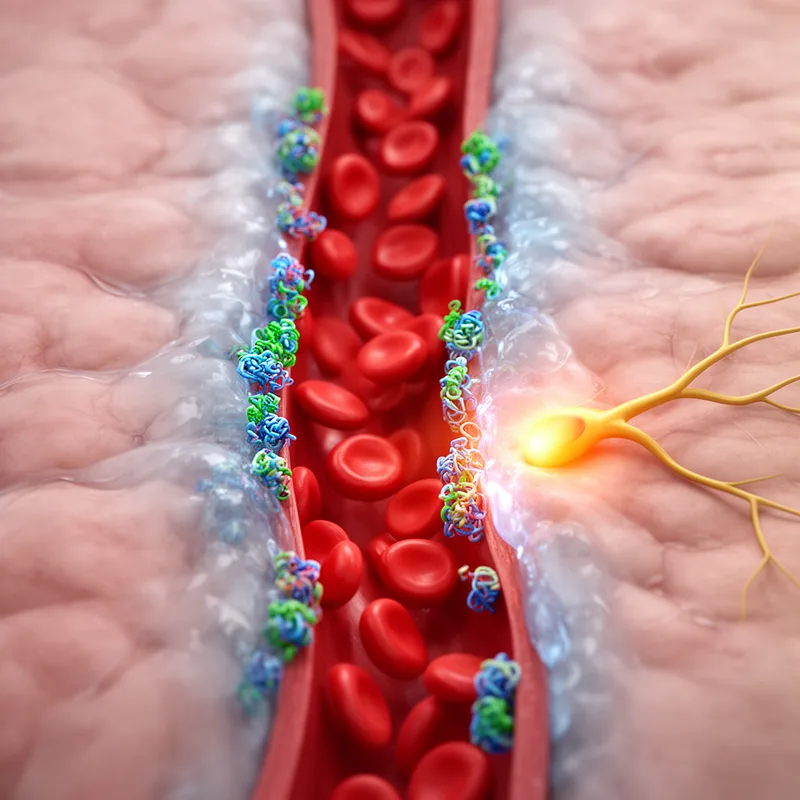
- Doctors study bradykinin for its effects on blood vessel dilation and its involvement in pain responses.
- bradykinin and adrenomedullin
- peptides, bradykinin
Examples
-
Unfortunately, treatment with omapatrilat inhibited not only ACE and neprilysin but also aminopeptidase P, which plays an important role in bradykinin degradation.
Academic text (2016) -
ACE also cleaves the vasodilator bradykinin, releasing an inactive 7-amino acid product.
Academic text (2018) -
Since heart failure is accompanied by resistance to some actions of bradykinin, angioedema might be less of a safety issue in this disorder.
Academic text (2016) -
Among them is bradykinin, a very potent activator of group III and IV afferent nerve endings, the afferents that signal pain to the CNS.
Academic text (1997) -
The peptide bradykinin is released during inflammation, causing blood vessels to widen and produce pain.
-
The role of bradykinin in the body includes signaling pain and inflammation during injury.
Surface Forms
Morphology
Etymology
Bradykinin comes from Greek parts brady- meaning 'slow' and kinin related to 'move', as in the familiar word kinetic. So a helpful way to remember bradykinin is to think of a 'slow-moving' body chemical that acts on blood vessels and can cause pain.

