

bradycardia
 3
7.8
3
7.8

- noun
- /ˌbrædɪˈkɑrdiə/
- Specialized
- With disease progression in acutely ill patients, signs of increased intracranial pressure (coma, hypertension, bradycardia, and cranial nerve III palsy) may also develop.
- sinus bradycardia
Loading YouTube…
Watch on YouTubeSo when the seizure stops, your heart rate can drop, what we call a bradycardia.
- So when the seizure stops, your heart rate can drop, what we call a bradycardia.
Examples
-
Other possible side effects include cold peripheries, hypotension, bradycardia, and erectile dysfunction in men.
Academic text (2011) -
Underlying causes included hypotension or hypoglycemia related to excessive medications, dehydration, tachycardia, bradycardia, and GI bleeding.
Academic text (2006) -
Bradycardia was discovered at 19-20 weeks' gestation in three cases and at 29 weeks in one, consistent with previous reports.
Academic text (2003) -
Bradycardia has been observed within the first few hours or days of initiation, as well as up to 2 weeks after coadministration.
Academic text (2016) -
More patients treated with ivabradine reported bradycardia (5% versus 1%) and visual disturbances (3% versus 1%).
Academic text (2010) -
The true incidence of bradycardia is unknown, but sinus node dysfunction occurs in 1 in 600 patients per year over the age of 65 years.
Academic text (2012) -
Some 42% of such cases feature bradycardia associated with high fever (pulse-temperature dissociation) — again as occurred in our patient.
Academic text (2003) -
In the present experiment, bradycardia was less pronounced in groups B, D, and E (30, 45, and 60 gm/kg) than in group C (30 gm/kg), indicating that this effect was not dose dependent.
Academic text (2014) -
Medetomidine and other alpha-2 adrenoceptor agonists induce bradycardia (Vainio et al., 1989; Pypendop et al., 1996).
Academic text (2014) -
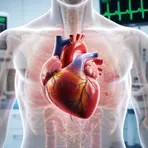
The doctor explained that bradycardia is a condition characterized by a heart rate of fewer than 60 beats per minute.
Antonyms
- Specialized
10
7.2
A heart that beats much faster than normal, usually over 100 beats a minute
How Fast
- Specialized
10
7.2

- Specialized
168
2.5
- Specialized
3
7.8
- Specialized
10
9.9
Surface Forms
Morphology
bradycardia = cardia (semi-transparent) = brady + cardia
The prefix 'brady-' indicates slowness, and 'cardia' relates to the heart, but the specific medical condition might not be immediately apparent to all learners.
Etymology
Bradycardia comes from Greek parts brady- meaning 'slow' and -cardia meaning 'heart'. So it simply means a 'slow heart', which is why doctors use it for a heart that beats fewer than about 60 times a minute.