
bovis


 1
9.9
- noun
- /ˈboʊvɪs/
- Specialized
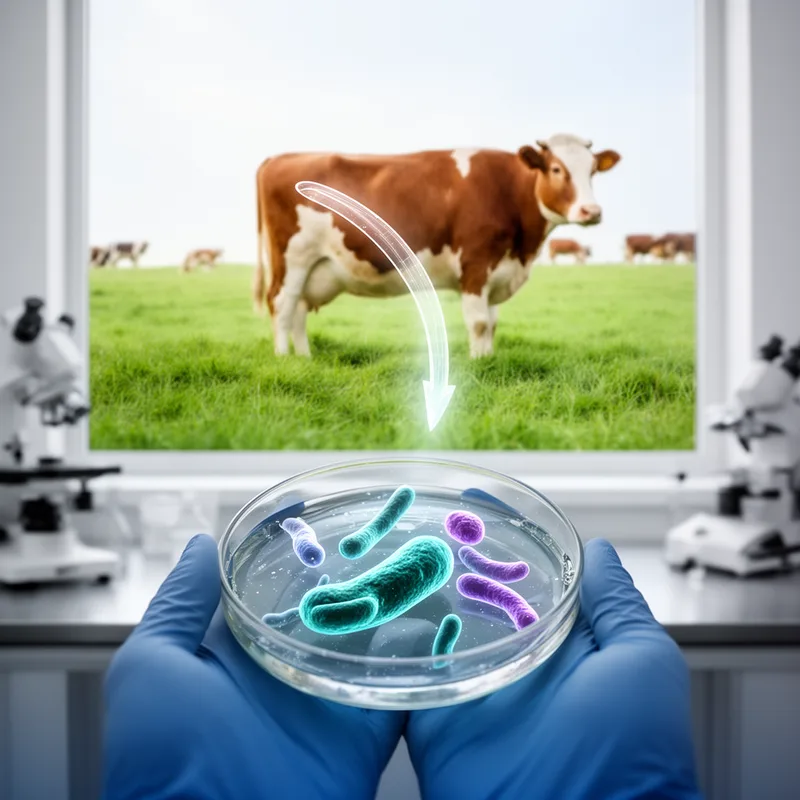
- Mycobacterium bovis is a bacterium that mainly affects cattle but can also infect humans.
- M. bovis
- Mycobacterium bovis
- bovis disease
Examples
-
However, current TB contact investigation guidelines do not include risk factors for M. bovis transmission.
Academic text (2015) -
Using spacer oligonucleotide and variable number tandem repeat typing, we identified the Mycobacterium bovis strain endemic in GKNPC wildlife.
Academic text (2015) -
Identify risk factors for Mycobacterium bovis infection in California.
Academic text (2015) -
In addition, current TB contact investigation guidelines should be changed to include risk factors for M. bovis transmission.
Academic text (2015) -
The risk of M. bovis infection proceeding to active disease in humans is not known.
Academic text (1992) -
One case of active M. bovis infection was diagnosed by sputum culture.
Academic text (1992) -
In addition, M. bovis disease may be present in case patients in the culture-negative subpopulation.
Academic text (2015) -
The highest cumulative incidence of human M. bovis disease occurred in lower southern California (Figure 2).
Academic text (2015) -
Human infection with Mycobacterium bovis is rare in developed countries because of milk pasteurization and the slaughter of infected cattle.
Academic text (1992) -
Domesticated elk herds in Alberta were investigated for evidence of M. bovis infection.
Academic text (1992)
Surface Forms
Etymology
Bovis is a Latin species name meaning 'of cattle', from the root bos 'cow'. As a species epithet it tells you the organism is linked to cattle (for example Mycobacterium bovis), so it is a short way to say 'cow-related'.