
bovid
- noun
- /ˈboʊvɪd/
- Specialized
- One way is by growing horns themselves—and, among many bovids, including wildebeests, that is just what they do.
Examples
-
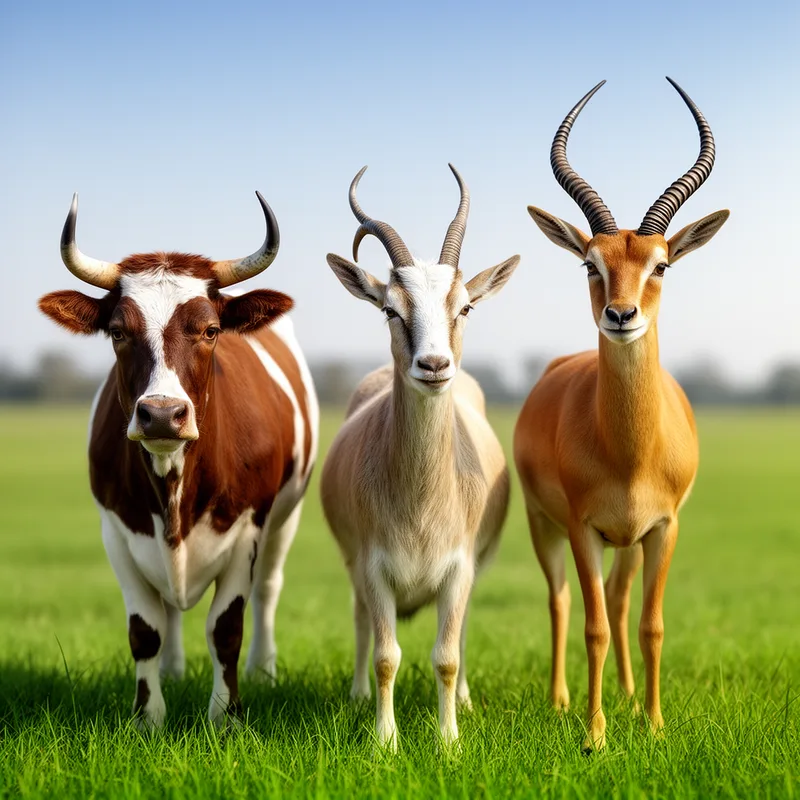
In the savannah, many species of bovids, including antelopes and wildebeests, can be seen grazing together.
-
Horns are the essential weapons with which bovid males compete for dominance; horns are also the most basic male secondary sex characteristics.
Academic text (2006) -
The animal, Pseudoryx, is described as a primitive bovid that has characteristics of both an antelope and an ox and has been seen alive only by the tribal inhabitants of the region, who provided scientists with the samples.
Academic text (1993) -
There is a hitch, however, to how male sexual development plays out in bovids, the large family of ungulates that comprises the antelopes and other hollow-horned ruminants, such as cattle, goats, and sheep.
Academic text (2006) -
The museum exhibit featured a skeleton of a prehistoric bovid that roamed the Earth millions of years ago.
-
Farmers often raise domestic bovids such as cows and goats for milk and meat.
Surface Forms
Morphology
bovid = bov + id
Built from the combining form 'bov-' plus the scientific suffix '-id'; the root 'bov' is not a standalone English word and the formation is technical, so an average B1 learner cannot derive the meaning from familiar English components.
Etymology
Bovid is a name for a member of the cattle family. The word comes from the Latin root bov- meaning 'cow' and the ending -id meaning 'a member of', so a bovid is a 'cow-type' animal like cattle, goats, sheep, antelopes, or buffalo.

