
bound morpheme
- noun
- /baʊnd ˈmɔrfim/
- Specialized
- In linguistics, the term 'bound morpheme' describes elements like 'un-' in 'unhappy', which must attach to other words.
- bound morphemes were omitted
- words with bound morphemes
- bound morphemes were removed
Examples
-
Words that consist of only a free morpheme are monomorphemic, and words that contain both free and bound morphemes are multimorphemic.
Academic text (2014) -
You can say it by itself, as opposed to the South at the end of a word like cats, we'll say that's a bound morpheme because it's not a word on its own.
-
First, words with bound morphemes were omitted from the analyses.
Academic text (2014) -
All words with bound morphemes were omitted from the analyses for both groups.
Academic text (2014) -
By removing words with bound morphemes, we could consider production errors phonological and not morphological in nature.
Academic text (2014) -
In an effort to maintain consistency in the makeup of the word lists for the two groups, we also removed words with bound morphemes from the S Group's wordlist.
Academic text (2014) -
Furthermore, words with bound morphemes were removed from the wordlists for children in both groups, thereby ensuring their production errors were phonological and not morphological in nature.
Academic text (2014) -
Notably absent from prior work is an examination of grammatical error rates using measures such as omitted words, omitted bound morphemes, and word-level errors.
Academic text (2014) -
In the Derivation subtest, individuals are given a base word, and a correct response involves affixing a bound morpheme to the given base word (e.g., farmer in the example above).
Academic text (2014) -
Other researchers have used a similar production cloze task, in which individuals are asked to complete sentences by affixing bound morphemes to nonwords (e.g., "Wap."
Academic text (2014)
Synonyms

A small part added to a word that cannot stand alone, like -s in cats and -ed in walked
Surface Forms
Morphology
The meaning is directly inferable from the parts: 'morpheme' = unit of meaning and 'bound' = tied/attached or restricted, so a 'bound morpheme' is a morpheme that is attached and cannot stand alone. This compositional logic (opposition of free vs. bound morphemes) is common cross-linguistically, making the term accessible to learners who know both words.
Etymology
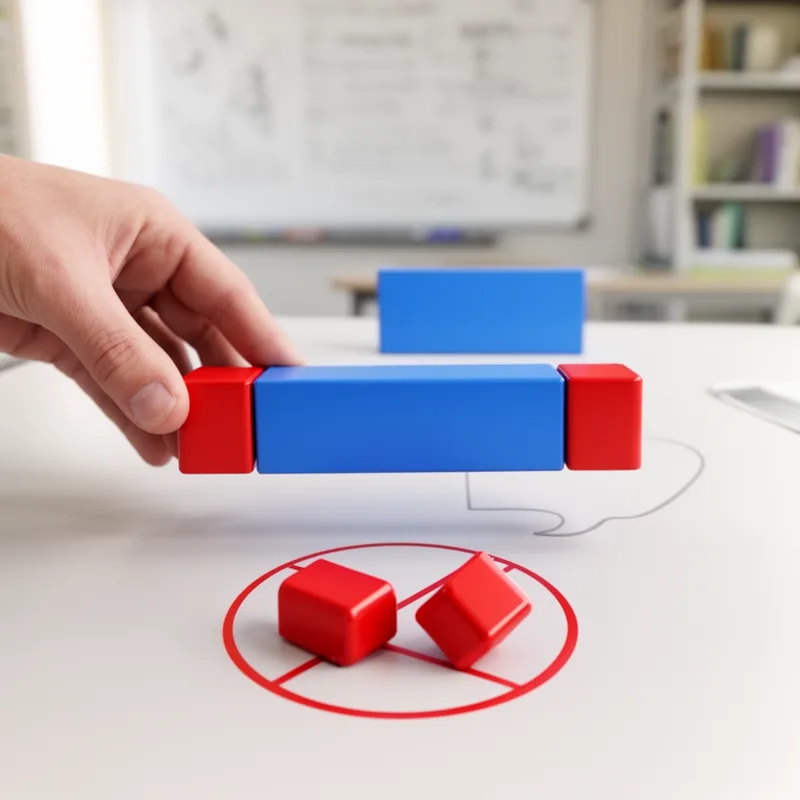
Bound morpheme comes from a simple picture: 'bound' means 'tied' and 'morpheme' is a small part of meaning. So a bound morpheme is a piece that is 'tied' to other parts and 'cannot stand alone', for example the plural '-s' in 'dogs'.

