

booster dose


 1
3.9
1
3.9
- noun
- /ˈbuːstər doʊs/
- Specialized
- This section says, 'A booster dose of hepatitis A vaccine should be given at six to 12 months after the initial dose.'
- 15-month booster dose
- 12-15-month booster dose
- booster dose for preschool-age
Examples
-
In 2006, following evidence that protection against meningitis C waned during the second year of life, a booster dose (combination Hib/MenC) was introduced at age 12 months.
Academic text (2011) -
However, Tdap can be given regardless of the timing of the last tetanus booster dose.
Academic text (2017) -
Booster doses are suggested after three years for people who are still at risk.
Academic text (2014) -
A single dose confers protection for up to 2 years, with a booster dose every 2 years for individuals who remain at risk.
Academic text (2017) -
In the United States, Hib conjugate vaccines were first recommended in 1988 as a single dose for children 18 months of age, and in 1991, they were recommended as a primary series starting at 2 months of age, with a booster dose at 12-15 months.
Academic text (2012) -
In 2003, a booster dose for preschool-age children (5 years of age) was introduced (diTekiBooster or DiTeKiPol Booster; SSI).
Academic text (2012) -
The model suggests that a vaccine shortage requiring deferral of the booster dose could last three years in the United States before loss of herd immunity would result in increasing rates of invasive Hib disease in children under 5 years of age.
Academic text (2012) -
To manage that shortage, the Centers for Disease Control and Prevention and partner organizations recommended that providers defer giving the 12-15-month booster dose to all children except those at high risk for invasive Hib disease (9).
Academic text (2012) -
For the best protection against COVID-19, it is essential for everyone to receive a booster dose after the initial vaccinations.
-
Health officials recommend a booster dose of the flu vaccine every year to maintain immunity.
Synonyms
 20
3.7
20
3.7
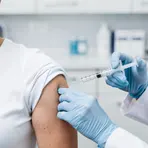
An extra vaccine dose given later to increase protection
 3
2.9
3
2.9
An extra vaccine dose you get after the first to make protection stronger

An extra vaccine or medicine given later to make the first one work well

To give a vaccine again to renew protection
How Protective
- Specialized
1
3.9
 345
3.3
345
3.3
Surface Forms
Morphology
The meaning 'an additional dose given after the initial series' is directly and transparently derivable from 'booster' (something that boosts or increases) plus 'dose' (a measured amount of medicine). This is a straightforward compound noun following normal English composition and has clear parallels in many languages, so a B1 learner who knows the constituents would understand it.
Etymology
Booster dose uses the image of a booster, an extra push, and dose, a small shot of medicine. So a booster dose is an extra shot given after the first ones to 'boost' your body's 'protection', which is why it means another vaccine dose to increase or keep that protection.