
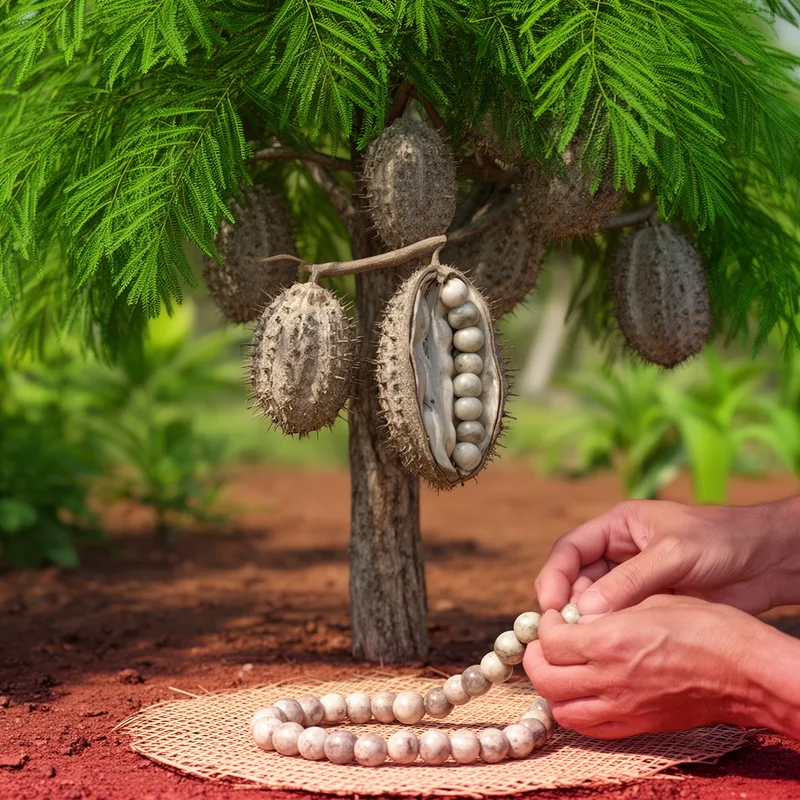
bonduc tree
- noun
- Australian
- The seeds of the bonduc tree are often polished and strung into decorative necklaces.
Examples
-
Local artisans craft beads from the pods of the bonduc tree.
-
The bonduc tree is native to tropical regions.
-
Gardeners appreciate the bonduc tree for its unusual prickly pods and attractive foliage.
-
Many artisans use the seeds from the bonduc tree for jewelry.
-
Local artisans craft beautiful jewelry using the seeds of the bonduc tree.
-
The pods of the bonduc tree are often used to make rosaries and other decorative items.
-
In tropical gardens, the bonduc tree is admired for its striking appearance and unique seed pods.
Synonyms

A tropical tree with large prickly pods that contain hard seeds used to make beads
A tropical tree with large prickly seed pods and hard shiny seeds used for jewelry and rosaries
A tropical tree with large prickly pods and brown seeds used for jewelry and prayer beads
Surface Forms
Morphology
The phrase is fully compositional: 'bonduc' denotes a particular coastal tropical plant with bead-like prickly seeds, and combining it with 'tree' straightforwardly yields a tree of that species. This species-denoting noun–noun compound follows common compounding patterns cross-linguistically, so a learner who knows both constituents can infer the meaning.
Etymology
Bonduc tree may come from the hard, round seeds inside its prickly pods that look like natural 'beads' used for necklaces and rosaries. Because people polished and strung these seeds as jewelry, the tree's name became linked to those bead-like seeds and their use.

