
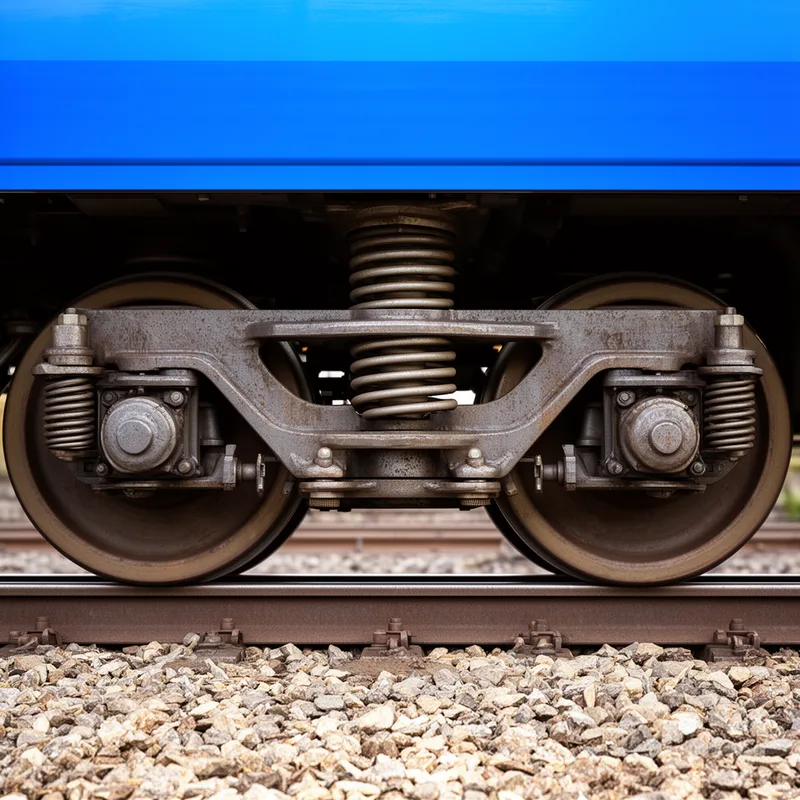
bogie
 11
8.2
11
8.2

- noun
- /ˈboʊɡi/
- UK
- Two bogies coming your way, Carter.
- bogie locomotive
Examples
-
Camber's still off in the left bogie.
-
Sir, we have multiple bogies converging on our starboard flank.
-
First bogie, coming your way.
-
We got three bogies coming in hot.
-
We are picking up two inbound bogies -about a half mile east of your location.
-
Gould, who recreated the Mason Bogie locomotive in SolidWorks, also uses that program for much of his industrial archaeology work.
Academic text (2009) -
Built by the Mason Locomotive Works, the colorful Mason Bogie is considered by many train buffs to be one of the most beautiful locomotives ever built.
Academic text (2009) -
Through his work at Gould Studios, William Gould calls upon 3-D design software to create engineered objects lost to the past, like the 1879 Mason Bogie locomotive.
Academic text (2009) -
The only surviving real-world Mason Bogie—a much earlier, different style from Gould's model—is maintained in mint condition at The Henry Ford Museum in Dearborn, Mich.
Academic text (2009) -
The train's bogie supports its heavy weight and allows it to navigate sharp turns smoothly.
Surface Forms
Etymology
Bogie comes from an older word bogey that meant a small cart or low wagon, like a tiny 'truck' or 'trolley' under a vehicle. So a bogie is the metal frame that carries the wheels and helps a train carriage turn smoothly.