
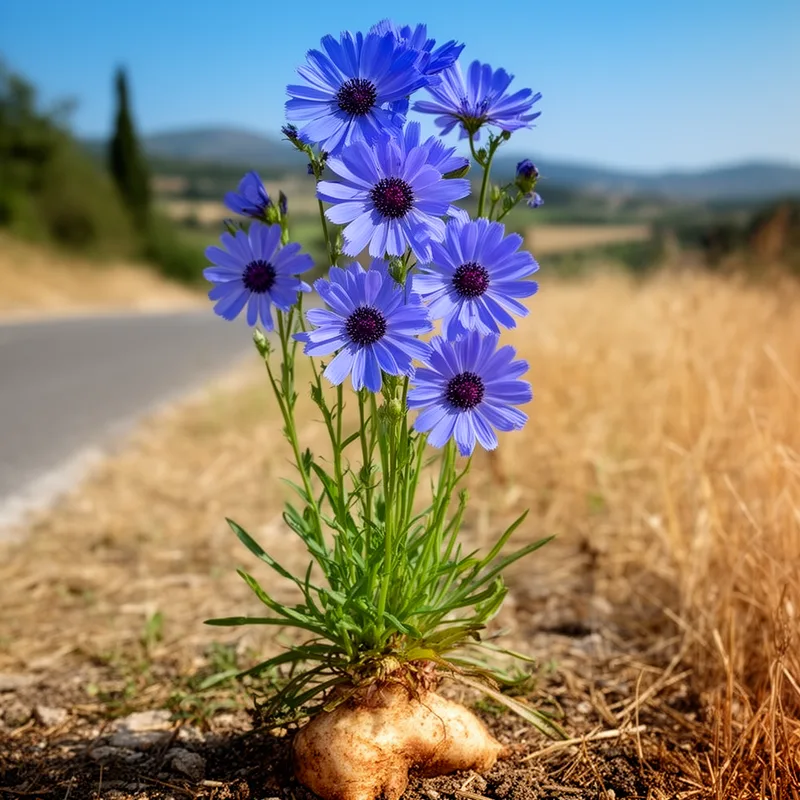
blue succory
- noun
- /bluː ˈsʌkəri/
- UK
- Blue succory is sometimes used as a coffee substitute after roasting its roots.
Examples
-
The field was dotted with the bright blue flowers of blue succory.
-
Farmers often grow blue succory along roadsides for its hardy, attractive blooms.
-
The blue succory blooms beautifully in the spring.
-
I saw a field of blue succories near the old barn.
-
Blue succory is known for its striking blue flowers that bloom in summer.
-
In many gardens, blue succory attracts bees and butterflies with its vibrant blossoms.
-
The leaves of blue succory can be added to salads for a unique flavor.
Synonyms

 2
6.5
2
6.5

A plant with blue flowers, bitter leaves, and an edible root

A plant with blue flowers grown for its edible leaves and root

A plant with blue flowers grown for its roots and leaves that people eat
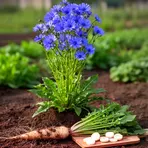
A plant with bright blue flowers grown for edible leaves and roots
Surface Forms
Morphology
The phrase is a straightforward adjective + noun combination where 'blue' specifies the color of the plant 'succory', so the overall meaning is directly derivable from the constituents. This follows a common compositional pattern (color + noun) found across languages, so a B1 learner who knows both words would understand it.
Etymology
Blue succory is named for its bright blue, flat flowers and the old word succory for 'chicory'. Farmers once roasted its roots to make a 'coffee substitute', so the name reminds us it is a blue-flowered plant whose roots were used like coffee.