
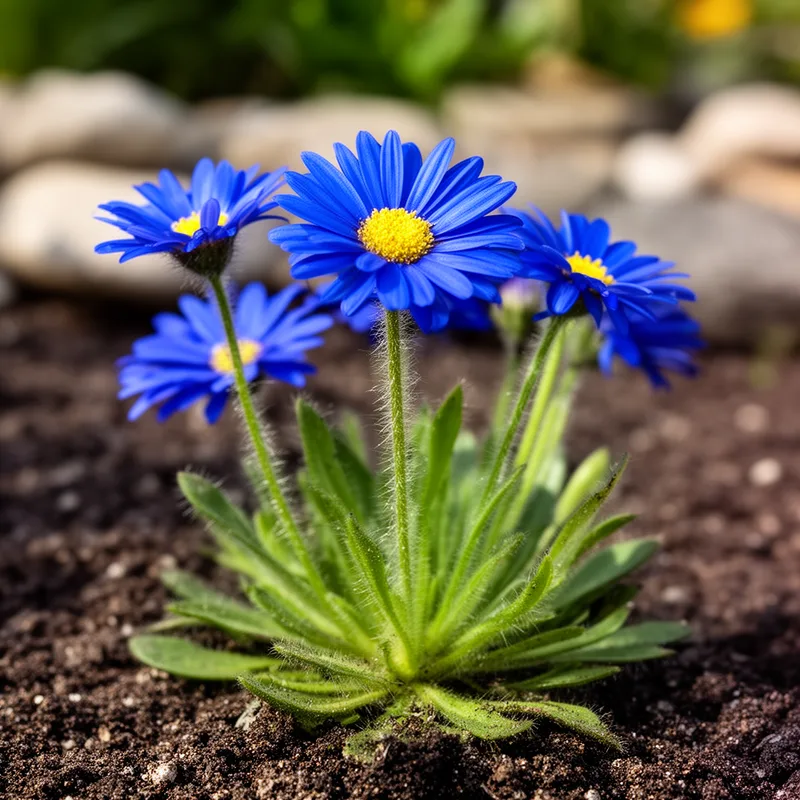
blue daisy
- noun
- Australian
- The blue daisy is prized for its vibrant blue flowers in garden borders.
Examples
-
Many South African gardens feature the blue daisy as a decorative perennial.
-
I saw a beautiful blue daisy in the garden.
-
I planted a blue daisy next to the roses to add a splash of color.
-
Look at that stunning blue daisy over there!
-
In her garden, she planted several blue daisies that bloomed beautifully in the summer.
-
The florist arranged a bouquet featuring bright blue daisies alongside white roses.
-
At the botanical garden, visitors admired the vibrant blue daisies that attracted many bees.
Synonyms

A small bush with blue flowers like a daisy
A small bush with blue, daisy-like flowers often grown in gardens

A South African plant with soft hairy leaves and bright blue daisy-like flowers
Surface Forms
Morphology
The meaning — a daisy that is blue or has blue petals — is directly and compositionally built from 'blue' (a color) + 'daisy' (a flower). This straightforward adjective + noun combination follows normal semantic composition and is cross-linguistically common, so a B1 learner who knows both constituents will readily infer the meaning.
Etymology
The noun blue daisy comes from how the plant looks: it has flowers like daisies with bright blue petals. That's why the name means 'a daisy-like plant with blue flowers'.

