
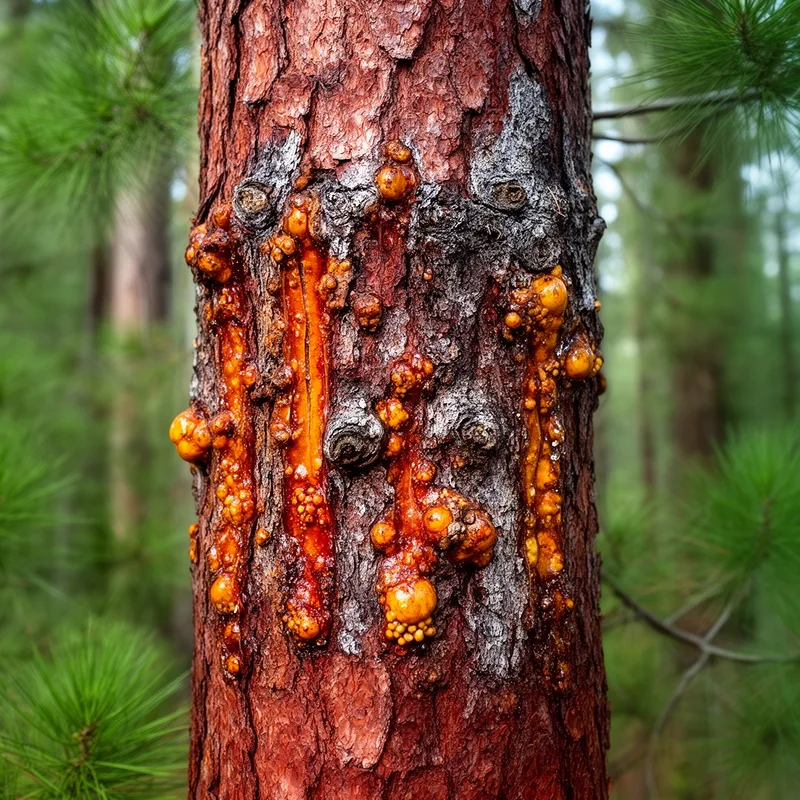
blister rust


 1
9.0
1
9.0
- noun
- /ˈblɪstər rʌst/
- Specialized
- The spread of blister rust poses a serious threat to the health of forests across North America.
- white blister rust
Examples
-
With little to halt its advance, blister rust has now reached some of the continent's most remote parks and wilderness areas.
Academic text (1998) -
Blister rust infections can take decades to kill a pine, and there is argument over the final cause of death.
Academic text (1998) -
"We have to identify individual trees that have important genes, such as resistance to blister rust," explains Richards.
Academic text (2005) -
But the repatriated trees were infected with blister rust, believed to have invaded Europe from Asia.
Academic text (1998) -
Blisters on the bark above and dead branches with red needles are symptoms of blister rust infection.
Academic text (1998) -
Blisters on the bark and dead branches with red needles indicate a blister rust infection in pine trees.
-
Scientists are studying ways to combat blister rust to protect vulnerable pine tree species.
Synonyms

A disease of pine trees caused by a fungus that makes blisters on the trunk and kills the wood
A disease caused by a fungus that makes blisters on the bark and weakens white pine trees
Surface Forms
Morphology
The compound is compositional: 'blister' specifies the type of 'rust' (a fungal disease), so a learner who knows 'blister' (raised bubble) and 'rust' (a plant fungal disease) can infer it refers to a rust disease that produces blisters on bark. This noun+noun formation follows a transparent descriptive pattern common across languages and is therefore readily deducible by B1 learners.
Etymology
Blister rust is named for how the disease looks: the fungus makes raised, blister-like swellings on the bark, and 'rust' is a common name for plant diseases that leave rusty spots. So, blister rust means 'a fungal disease of pine trees that causes blisters and open sores on the bark'.