
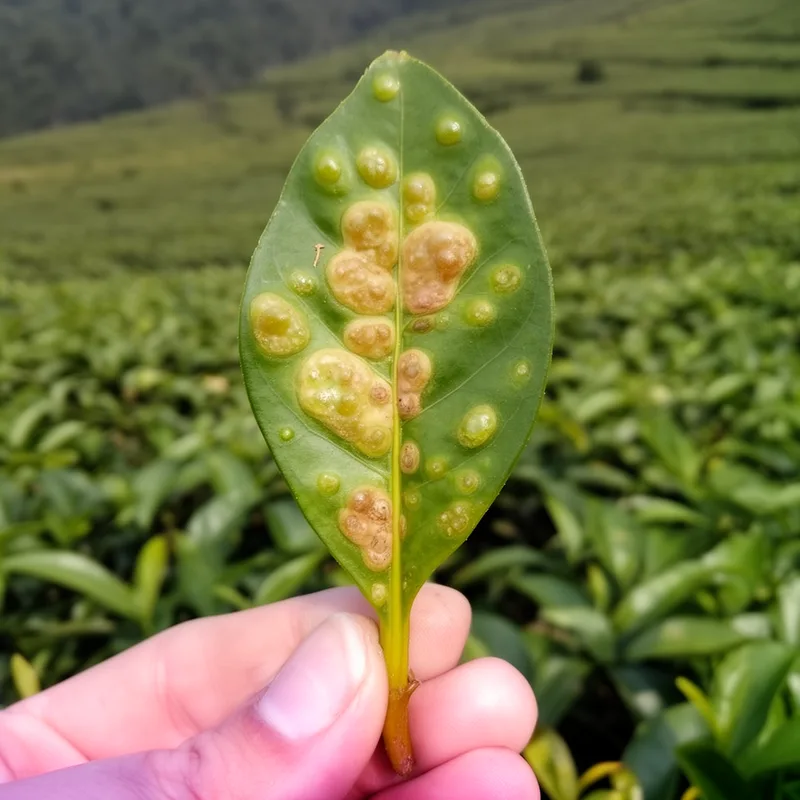
blister blight
- noun
- Specialized
- The tea crop suffered a severe loss due to a sudden outbreak of blister blight.
Examples
-
Experts recommend early detection to prevent the spread of blister blight in plantations.
-
Experts recommend using fungicides to control blister blight in tea plantations.
-
Farmers learned new methods to manage and treat blister blight this season.
-
The tea plants were affected by blister blight this season.
-
Farmers are worried about blister blight in their crops.
-
Farmers learned how to recognize and treat blister blight to protect their tea plants.
-
The sudden spread of blister blight caused significant damage to the Scotch pine forest.
Synonyms
 7
7.3
7
7.3

A plant disease that makes leaves and stems die without rotting
Surface Forms
Morphology
The meaning 'a blight marked by blister-like spots' is directly and transparently derivable from combining 'blister' (a raised lesion) with 'blight' (a plant disease); the compound simply names a type of blight characterized by blisters. This noun–noun compounding pattern is common and follows predictable composition, so a B1 learner who knows both constituents would likely infer the MWE's meaning.
Etymology
Blister blight gets its name from how the plant looks when it is sick: blister means the small raised spots on leaves, and blight means a 'plant disease'. So blister blight means a disease that makes blister-like spots on leaves.