
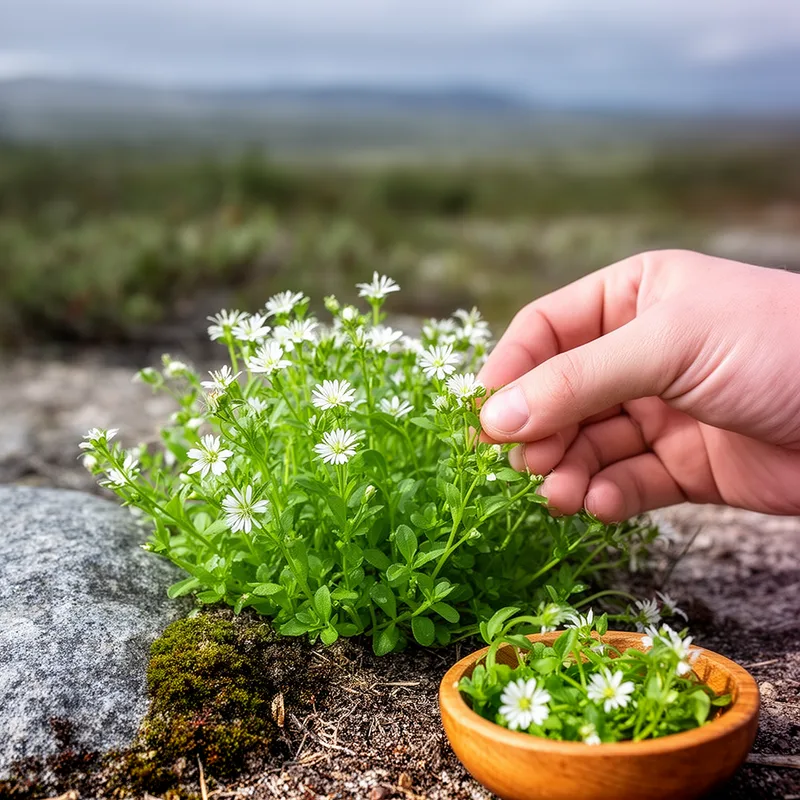
blinking chickweed
- noun
- UK
- Foragers often collect blinking chickweed to add a fresh, slightly tangy note to salads.
Examples
-
We studied the spread of blinking chickweed in the subarctic meadows during our botany field trip.
-
The trail was lined with patches of blinking chickweed beside the mossy rocks.
-
The blinking chickweed grows abundantly in my garden.
-
Have you tried blinking chickweed in your salads?
-
Foragers often collect blinking chickweed to add a fresh, slightly tangy note to salads.
-
The trail was lined with patches of blinking chickweed beside the mossy rocks.
-
We studied the spread of blinking chickweed in the subarctic meadows during our botany field trip.
Synonyms

A small plant with flowers that grows in wet places and has leaves people eat
A small wild plant like lettuce that grows in moist shaded northern woods

A small water plant with leaves you can eat in salads
Surface Forms
Morphology
blinking + chickweed
The phrase is a straightforward adjective+noun composition: a B1 learner who knows 'chickweed' (a low‑growing plant) and the basic sense of 'blinking' (something that blinks or appears to open/close/flash) will infer this denotes a particular type of chickweed. Botanical details like the local name 'Indian lettuce' are specialized, but the core meaning — a kind of chickweed — is directly derivable from the constituents.
Etymology
The plant name blinking chickweed may come from the way its tiny white flowers seem to blink open and shut in the sun or wind, while chickweed is a common name for small plants chickens liked to eat. So the name describes a small northern plant with delicate white flowers and leaves you can eat.

