
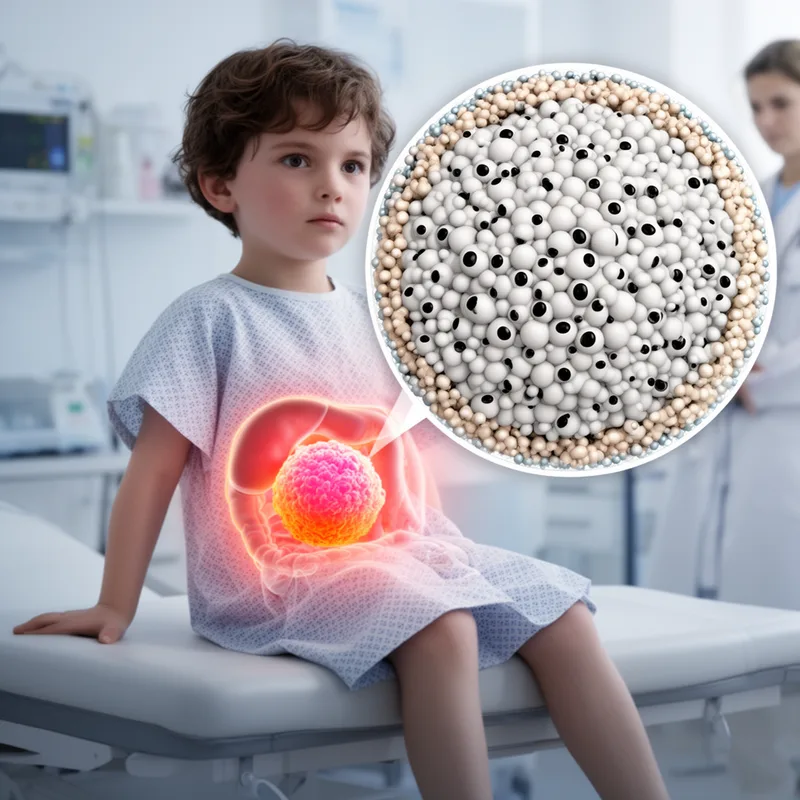
blastoma
- noun
- /blæˈstoʊmə/
- Specialized
- Angela's son was diagnosed with a blastoma, which required extensive treatment over several months.
Examples
-
The doctor explained that Charlie's pleuropulmonary blastoma is a rare tumor that forms from immature cells.
-
Parents of children with blastoma often seek support groups to navigate the challenges of the diagnosis.
-
It's called a blastoma.
-
In view of its complex histologic architecture, TCS has also been known as malignant teratoma, blastoma, and mixed mesodermal tumor.
Academic text (2010) -
Angela Farley, a local mom whose 4-year-old son Charlie just finished chemotherapy for a rare cancer called pleuropulmonary blastoma, said the organization has also given her the opportunity to open up about the disease.
Blog text (25)
Synonyms

 368
3.6
368
3.6

A mass of extra cells in the body that does not help it
A growth of young cells that do not become normal body cells
A rare tumor made of immature cells that look like two different cancer types
Surface Forms
Morphology
blastoma = blast (opaque) = blast + oma
The word is formed from the medical combining form 'blast-' (immature cell) plus '-oma' (tumor), a formation that is specialized and not inferable by average learners from the common meaning of 'blast'.
Etymology
The word blastoma comes from the Greek root blastos meaning 'sprout' or 'bud' and the ending -oma meaning 'tumor'. So a blastoma is a tumor made of very young, 'sprout-like' cells, which is why these cancers often start in developing tissues in children.