
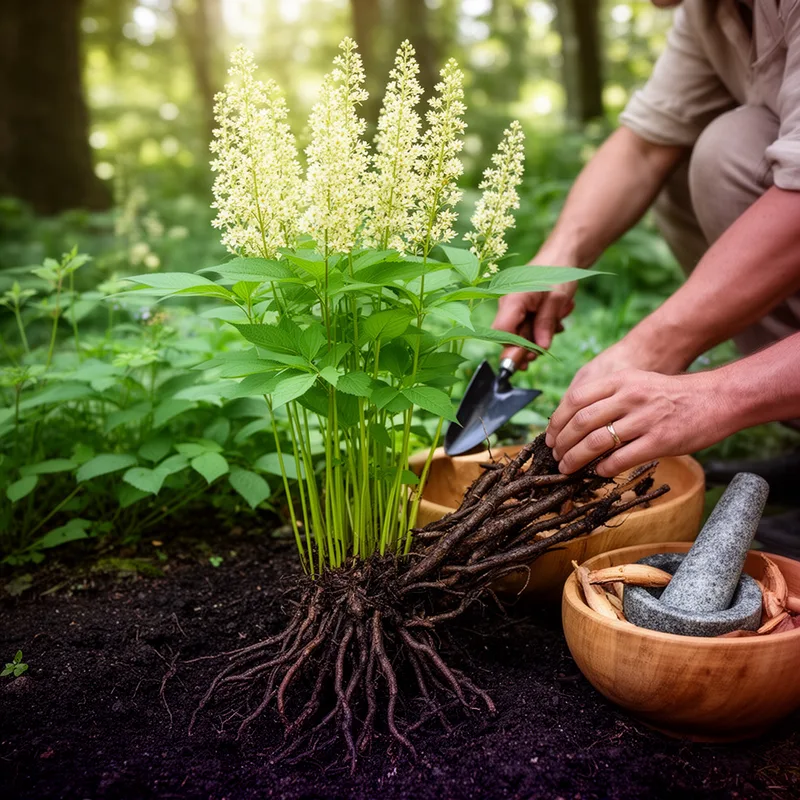
black snakeroot
- noun
- /blæk ˈsneɪkˌruːt/
- US
- Researchers continue to study the medicinal properties of black snakeroot.
Examples
-
Many herbalists use black snakeroot in traditional remedies for various ailments.
-
Have you ever tried black snakeroot in a tea?
-
The shady woodland garden is an ideal environment for growing black snakeroot.
-
Many herbalists use black snakeroot for its medicinal properties.
-
Black snakeroot is often used in herbal medicine to treat various ailments.
-
People in some regions have relied on black snakeroot for its medicinal properties for generations.
-
The roots of black snakeroot are harvested for use in traditional remedies.
Surface Forms
Morphology
black + snakeroot
The compound is compositionally built from 'black' + 'snakeroot', so a learner who knows both words would likely infer it names a type/variety of snakeroot (i.e., a plant) and that 'black' is a color modifier. However, 'snakeroot' itself is a lexicalized plant name (often referring to medicinal species) and the specific sense of a North American medicinal root and its cultural uses is not fully predictable from the constituents, making the overall meaning only partially transparent.
Etymology
Black snakeroot comes from old folk medicine. People saw its long, dark root that looked like a snake and 'used it to treat snake bites', so the name now refers to a dark-rooted plant used in traditional remedies.

