
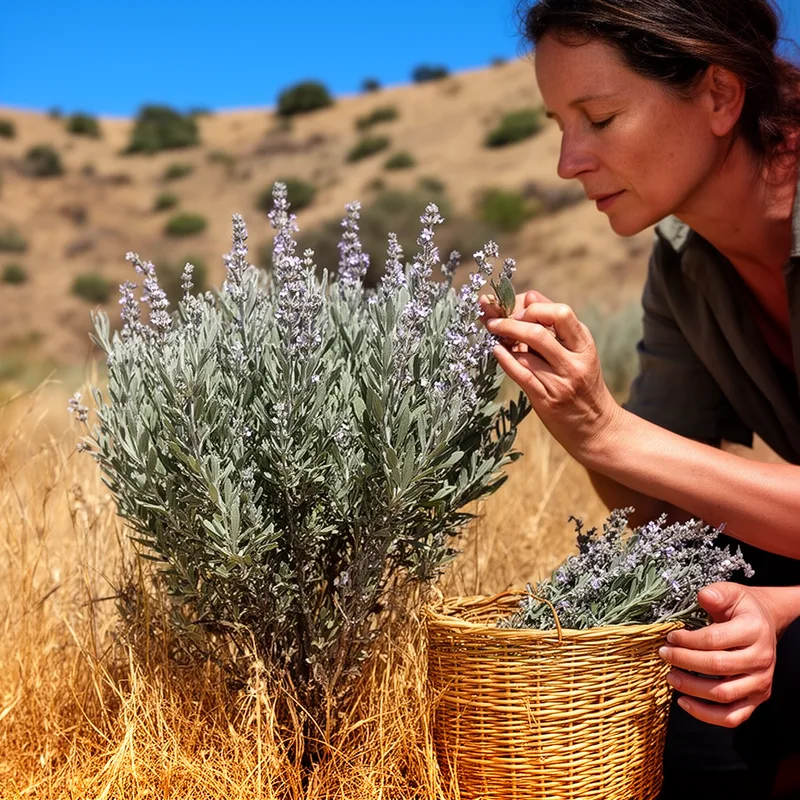
black sage
- noun
- /blæk seɪdʒ/
- US
- Many traditional remedies include black sage for its healing properties.
Examples
-
The hills were covered with blooming black sage after the winter rains.
-
Local herbalists often gather black sage for its medicinal properties.
-
Hikers enjoy the strong scent of black sage along the southern California trails.
-
The black sage grows abundantly in southern California.
-
Native Americans have traditionally used black sage for its aromatic properties in various ceremonies.
-
In her garden, she planted several herbs, including black sage, which is known for its soothing qualities.
-
Many people use black sage in smudging rituals to promote relaxation and clarity.
Surface Forms
Morphology
This is a straightforward adjective + noun compound: a learner who knows 'black' and 'sage' can readily infer it refers to a (dark-colored) type of sage plant. Color + plant-name compounds are productive and cross-linguistically common, so the general meaning is transparently derivable even if the specific botanical details are unknown.
Etymology
Black sage may get its name from the plant's dark, hairy leaves and the strong, smoky smell when the leaves are crushed. People in southern California and Mexico used this sage as 'medicine', so the dark look and scent help explain why the shrub is called black and used for healing.

