
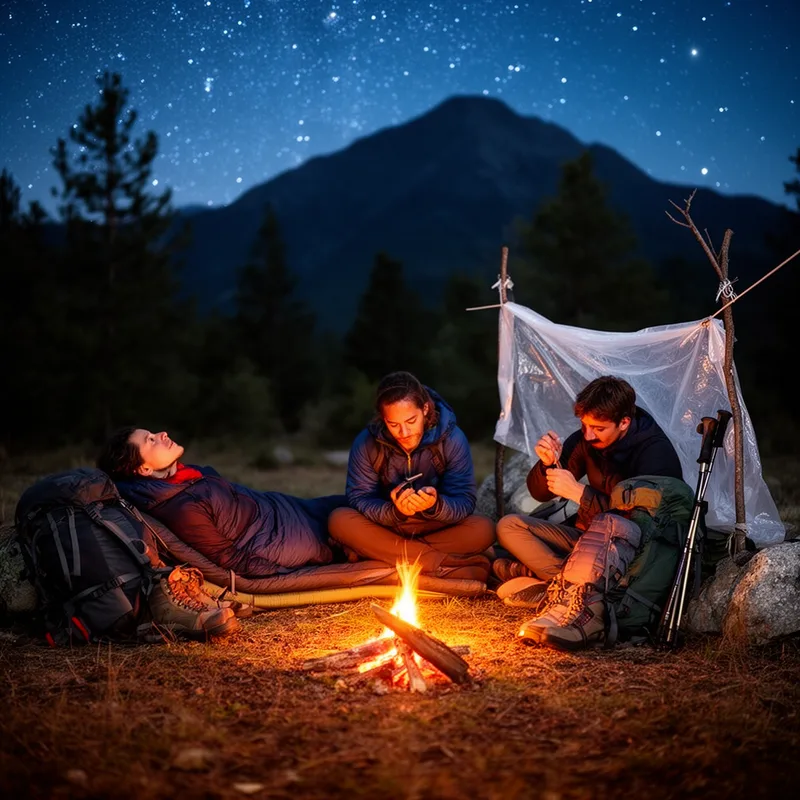
to bivouac


 1
9.5
1
9.5
- verb
- /ˈbɪv.wæk/
- Most of the time, though, the men bivouacked in improvised straw and wood shelters or under the stars, or were billeted on households along the line of March.
Loading YouTube…
Watch on YouTubeWell, they there were soldiers bivouacked at at the Page Mill camp.
- Well, they there were soldiers bivouacked at at the Page Mill camp.
- Most of the time, though, the men bivouacked in improvised straw and wood shelters or under the stars, or were billeted on households along the line of March.
Examples
-
Realizing it was getting dark, the explorers quickly set up to bivouac under the trees.
-
Well, they there were soldiers bivouacked at at the Page Mill camp.
-
There wasn't an army in all history that could bivouac like the Army of the Potomac.
Fiction book (1999) -
The unsuspecting Americans were weary, sullen, and interested mainly in where they would bivouac.
Fiction book (1990) -
With the sun setting behind the mountains, they decided to bivouac for the night under the stars.
-
After a long day of hiking, the group chose to bivouac in a clearing near a stream.
Synonyms
 220
1.0
220
1.0
To stay in a tent or simple shelter outdoors
 48
2.4
48
2.4
To sleep outdoors for a short time, often in a tent
 5
7.6
5
7.6
To set up tents or temporary shelters and live there for a time
 3
2.8
3
2.8
To sleep or stay in a small portable shelter outside
 1
9.9
1
9.9
To sleep outdoors in a simple shelter
How Temporary
1
9.5
 220
1.0
220
1.0
Surface Forms
Etymology
Bivouac as a verb comes from the same old German roots bei 'by' and wacht 'watch', meaning to stay near that guard or camp for a short time. That's why to bivouac means to camp or stay briefly in a simple shelter outdoors.