
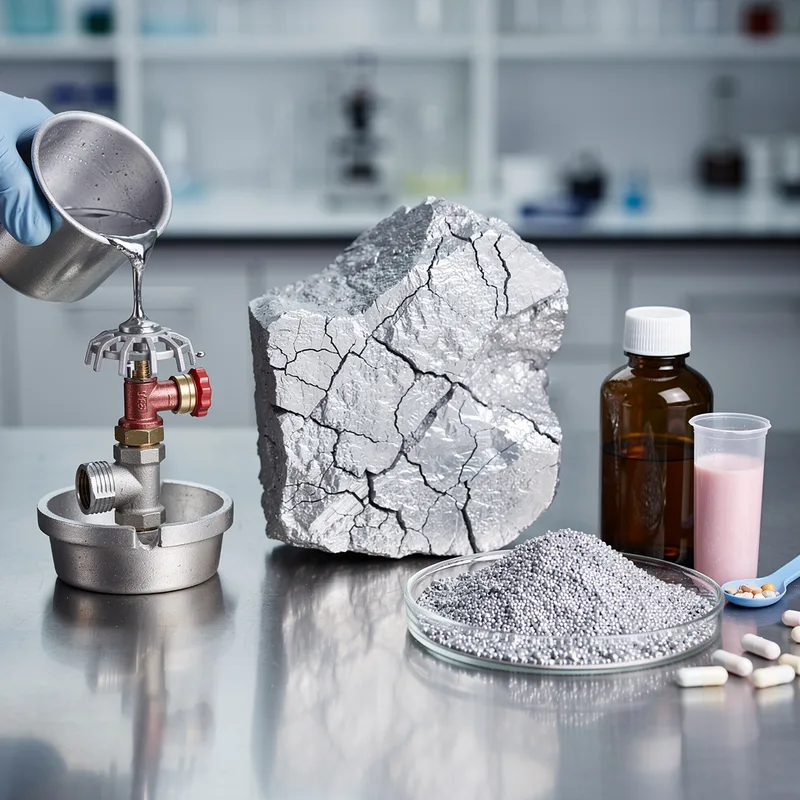
bismuth
 1
8.6
1
8.6

- noun
- /ˈbɪzməθ/
- Specialized
 :
bismuto
:
bismuto
- Worse still, existing treatments like mercury and bismuth were considered unreliable at best and potentially harmful at worst.
- bismuth subsalicylate
- bismuth germanate
- bismuth citrate
You can use silver, gold, lead, tin, bismuth, copper, brass, bronze, and much more.
- You can use silver, gold, lead, tin, bismuth, copper, brass, bronze, and much more.
- Also, if you're taking certain medications or over the counter things like a bismuth, then that can also give you black poop.
- Layered magnesium oxide with bismuth interlaces.
- The researchers proposed to make it of bismuth strontium, bismuth strontium, calcium copper, bismuth strontium, bismuth, strontium.
Examples
-
You can use silver, gold, lead, tin, bismuth, copper, brass, bronze, and much more.
-
An alloy of lead and bismuth had also been considered as a coolant because it has a lower melting point than pure lead.
Academic text (2009) -
Contains bismuth subsalicylate; use with caution and follow dosage instructions closely.
Academic text (2007) -
Most available OTC antidiarrheal medications on the market contain bismuth subsalicylate (Pepto Bismol, Kaopectate, Kapectolin, and Maalox Total Stomach Relief).
Academic text (2007) -
Bismuth is often used in medicines to treat digestive issues, particularly in the form of bismuth subnitrate.
-
The alloy contained several metals, including bismuth, which improved its strength and durability.
-
In the laboratory, bismuth was selected for its non-toxic properties in medical applications.
Synonyms
 25
8.4
25
8.4
The chemical symbol for bismuth, a heavy brittle metal with atomic number 83
Surface Forms
Etymology
The word bismuth comes from a German word Wismut that meant 'white mass' or 'white metal'. That's why bismuth is the name for a heavy, silver-white metal used in medicines and alloys.