
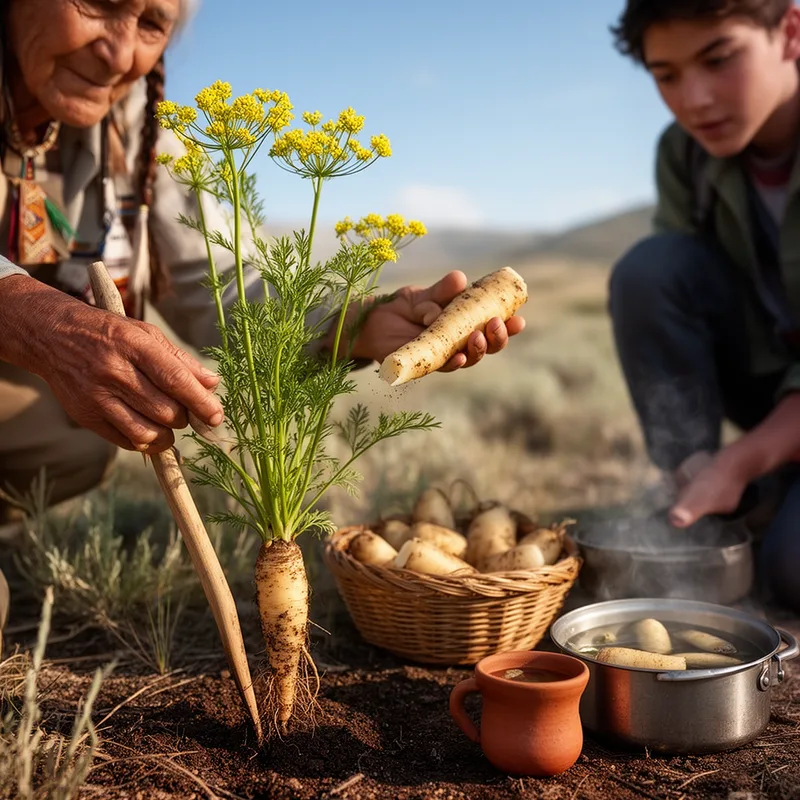
biscuitroot
- noun
- /ˈbɪskɪtˌruːt/
- US
- The biscuitroot plant is known for its starchy roots, which were historically harvested and consumed by Native tribes.
Examples
-
According to the division of labor, Nez Perce men harvested the fish and women were the ones who harvested three main root crops: camas, biscuitroot, and snowdrops.
Academic text (2005) -
17 Nimiipuu men hunted for game and harvested fish, and Nimiipuu women harvested an abundance of plant foods, including three main root crops: camas, biscuitroot, and snowdrops.
Academic text (2012) -
The Indigenous peoples of North America often relied on biscuitroot as a nutritious food source during lean times.
-
In their traditional diets, many Native American tribes included biscuitroot for its edible roots.
Synonyms

A North American plant with edible roots eaten by native people

A North American plant with underground tubers that people eat

A plant from central North America that lives for many years with hairy stems and edible underground roots

A North American plant with hairy stems and roots you can eat like a potato
Surface Forms
Morphology
Etymology
Biscuitroot is a clear compound of biscuit and root, named because people, including Indigenous communities, cooked the plant's roots into small, bread-like 'biscuits' to eat. So the name tells you it is a 'root' used as food.

