

biopsychological


 1
8.0
- adjective
- /ˌbaɪoʊˌsaɪkəˈlɒdʒɪkəl/
- Specialized
- Researchers are studying the biopsychological factors that influence behavior in children.
Examples
-
Grounded in ecological theory, Grzywacz and Marks (2001) support a biopsychological perspective of physical activity, suggesting future health behavior research consider determinants from multiple contexts and multiple levels of human ecology.
Academic text (2009) -
As stated by Gardner, intelligence is the "biopsychological potential to process information that can be activated in a cultural setting to solve problems or create products" (Denig, 2004).
Academic text (2008) -
The biopsychological perspective suggests psychological consequences due to attitudes associated with phenotypic variation.
Academic text (2013) -
Cultural, historical, and biopsychological realities of race within the United States further dictate self-defining behaviors and identification.
Academic text (2013) -
This postulation of the breaking of the vessels as a mytho-empirical projection of birth is in line with various biopsychological premises that envisage the experience of birth by the neonate as a catastrophe.
Academic text (1990) -
The biopsychological approach helps explain how stress can affect both your mind and body.
-
Understanding how biopsychological mechanisms impact mental health can lead to better treatment options.
Synonyms
 1
8.2
About how the brain affects thoughts and behavior
 1
9.3
About how the mind and body affect each other
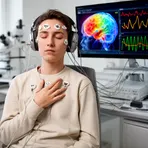 1
8.4
Relating to how the mind and body affect each other
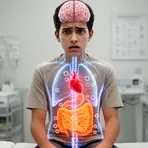 1
8.4
How the mind and the body affect each other
How Biological

Surface Forms
Morphology
biopsychological = psychological (transparent) = bio + psych + ological
The word is transparently formed by adding bio- to psychological, giving the sense of biological and psychological factors.
Etymology
Biopsychological combines familiar parts: bio- (from Greek bios, 'life') and psycho- (from psyche, 'mind') with -logical (from logos, 'study'), just like in biology and psychology. So biopsychological means studying 'life' and 'mind' together, which is why it describes how body and mind work together in behaviour.