
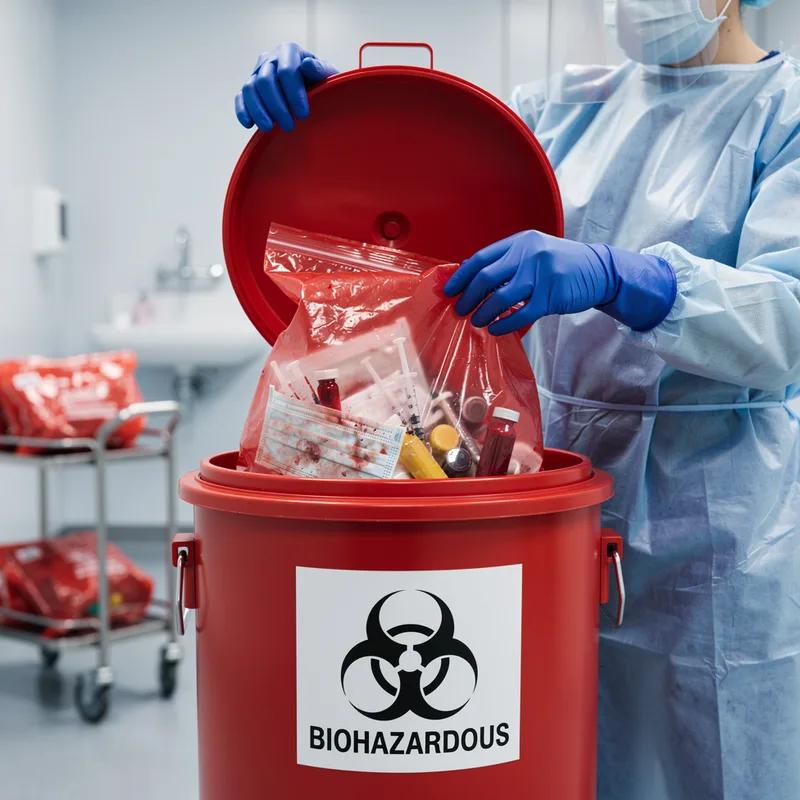
biohazardous
 1
7.4

- adjective
- /ˌbaɪoʊˈhæzərdəs/
- Specialized
- Secure all biohazardous materials immediately.
- biohazardous waste
- biohazardous waste management
- biohazardous sharps
Examples
-
In the present study of medical waste, only biohazardous waste was considered.
Academic text (1994) -
Ninety percent of the respondents indicated that autoclaves were used for biohazardous waste treatment at their institutions.
Academic text (2003) -
Identify activities at the university that are likely to result in biohazardous waste generation.
Academic text (2003) -
What are the most common methods of treatment and disposal for various categories of biohazardous waste produced?
Academic text (2003) -
A survey was conducted of environmental health and safety professionals responsible for biohazardous waste management at 122 institutions.
Academic text (2003) -
Non-infectious human cultures were also regarded as biohazardous by 84 percent of respondents.
Academic text (2003) -
Sharp items contaminated with material infectious to animals were managed as biohazardous sharps by 79 percent of the respondents.
Academic text (2003) -
All scalpels and razor blades were managed as biohazardous sharps by 72 percent of institutions.
Academic text (2003) -
Syringes without needles attached were managed unconditionally as biohazardous waste by 54 percent of respondents.
Academic text (2003) -
Workers must wear protective gear when handling biohazardous materials to ensure their safety.
Synonyms
 89
5.2
Likely to cause harm or danger
 7
3.5
A poisonous substance that can kill or harm living things
Antonyms




How Dangerous

Surface Forms
Morphology
Etymology
The word biohazardous breaks into bio- meaning 'life', as in biology, and hazard meaning 'danger' or 'risk', so it tells you that something is a 'danger to living things' like people, animals, or the environment.