
bioelectronics


 1
6.0
1
6.0
- noun
- /ˌbaɪoʊɪˈlɛktrɪks/
- Specialized
 :
bioelectrónica
:
bioelectrónica
- Technological advances in bioelectronics, imaging procedures, and laboratory computing have made it possible to record signals from the brain and physiological systems with increasing accuracy (Cacioppo and Tassinary, 1990).
Examples
-
Behind the man was the clean room of an advanced bioelectronics lab, built to Jambi's specifications, furnished with all that he had requested to fill it.
Fiction book (1991) -
Technological advances in bioelectronics, imaging procedures, and laboratory computing have made it possible to record internal feeling signals for building a meaningful bridge from our physiological system to psychological meaning with increasing accuracy, and the Cassel Bio-Sensors is designed for this purpose.
Academic text (1999) -
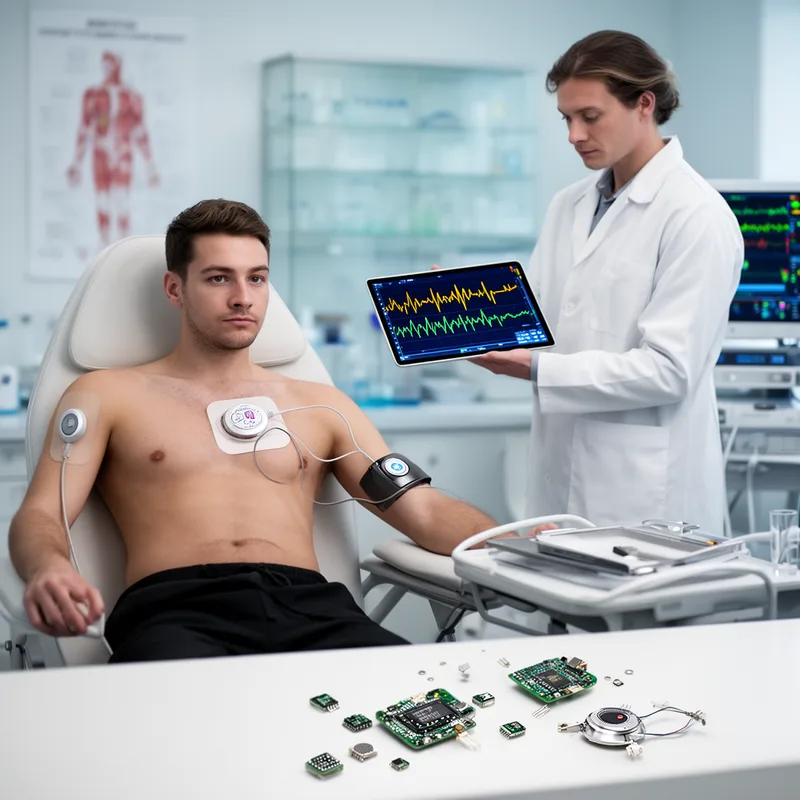
Researchers are developing new devices using bioelectronics to monitor patients' health in real-time.
-
The field of bioelectronics blends biology and electronics to create innovative medical devices.
-
With advancements in bioelectronics, doctors can now use sensors that interact with living tissues during surgeries.
How Applied
- Specialized
5
6.5

- Specialized
1
6.0
Surface Forms
Morphology
bioelectronics = electronics (transparent) = bio + electronics
The meaning is straightforwardly built from the biological prefix 'bio-' plus 'electronics', referring to electronics used in biological or medical contexts.
Etymology
Bioelectronics comes from the prefix bio- meaning 'life' and electronics meaning 'using electricity'. So, bioelectronics is the study of electronic devices that work with living things, especially for medical or health purposes.