
biocycle
- noun
- /ˈbaɪoʊˌsaɪkəl/
- Specialized
 :
biociclo
:
biociclo
- Forty-one years ago, in the first issue of a journal now known as BioCycle, a report was published on how a small anaerobic digester could provide an economic solution to the treatment of farm wastes.
Examples
-
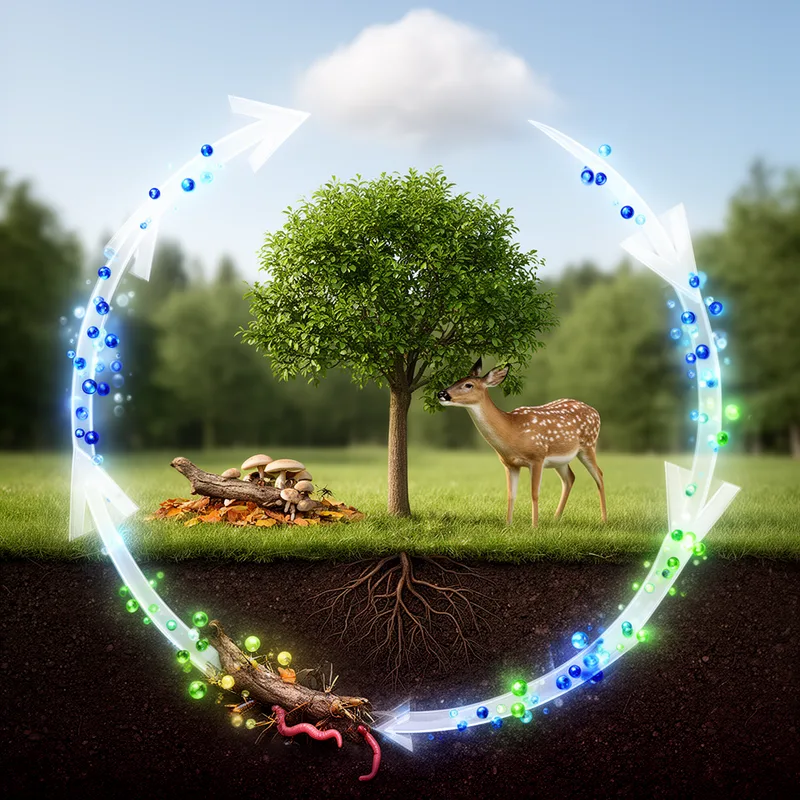
The biocycle describes how carbon is recycled through the environment, emphasizing the importance of each step in nature.
-
Understanding the biocycle can help scientists predict how changes in the ecosystem impact the flow of nutrients.
-
The BioCycle survey in 1996 identified 15 operating facilities, down from 21 a few years ago.
Academic text (1996) -
From 1989 through 1999, this report ran in a spring issue of BioCycle, typically in April.
Academic text (2001) -
A recent report in BioCycle covered watering options available on turning equipment.
Academic text (2001) -
The editorial staff of BioCycle will shortly publish a special report on the latest advances.
Academic text (2001) -
The questionnaires are being completed now, and the finished report will appear in the December 2001 issue of BioCycle.
Academic text (2001) -
When the State of Garbage report did not appear in the April 2001 issue of BioCycle, we began receiving numerous calls about when it would be available.
Academic text (2001) -
Of 43 states responding to BioCycle's annual survey, 33 report an increase in beneficial use in their state.
Academic text (1996) -
The report is excerpted from a presentation at the BioCycle 26th Annual National Conference in Phoenix, Arizona, in May 1996.
Academic text (1996)
Synonyms

 707
2.8
707
2.8

A series of events that repeat in the same order
Surface Forms
Morphology
Etymology
The word biocycle puts together bio- meaning 'life', as in biology, and cycle meaning 'circle' or 'repeat', as in a bicycle whose wheels go round. So, a biocycle is a 'life circle', a repeating set of natural processes like the carbon or nitrogen cycle.