
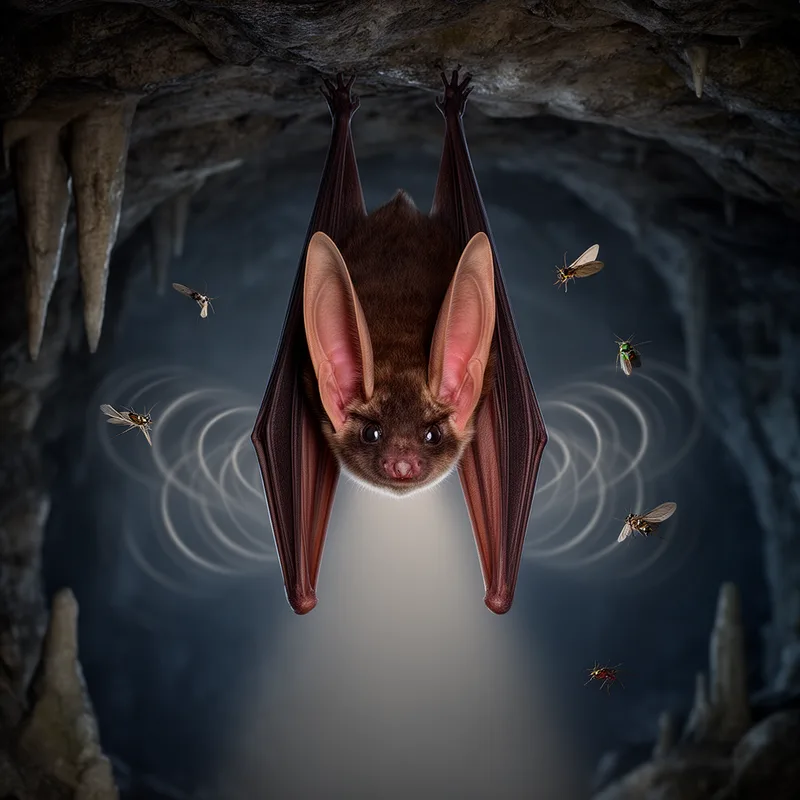
big-eared bat
- noun
- /ˈbɪɡˌɪrd bæt/
- Specialized
- After monitoring their habitats, scientists found that big-eared bats are crucial for local ecosystems.
Examples
-
One of them chewed on a big-eared bat that had fallen from its perch high up in the cave.
Fiction book (2002) -
The researchers observed several big-eared bats roosting in the warm cave during their study.
-
The big-eared bat is easily recognizable due to its extremely large ears compared to its body size.
Synonyms
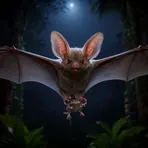
A large bat from South and Southeast Asia that eats small animals at night and has very large ears
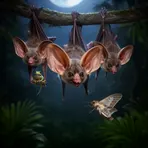
A group of large-eared bats like false vampire bats found in Africa, Asia and Australia
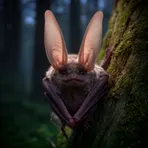
A bat with very long ears

A bat with very long ears that finds insects by sound
How Big


Surface Forms
Morphology
big-eared + bat
The meaning 'a bat with very large ears' is directly and transparently derived from the constituents: 'big' (large) + 'eared' (having ears) modifying 'bat' (the mammal). This adjective–noun compounding is a regular, cross-linguistically common pattern and would be immediately comprehensible to a B1 learner who knows 'big', 'ear'/'eared', and 'bat'.
Etymology
Big-eared bat comes from the words big and eared, because these bats have very large ears. Those ears help them 'listen' for tiny insects, so the name highlights their keen 'hearing'.