
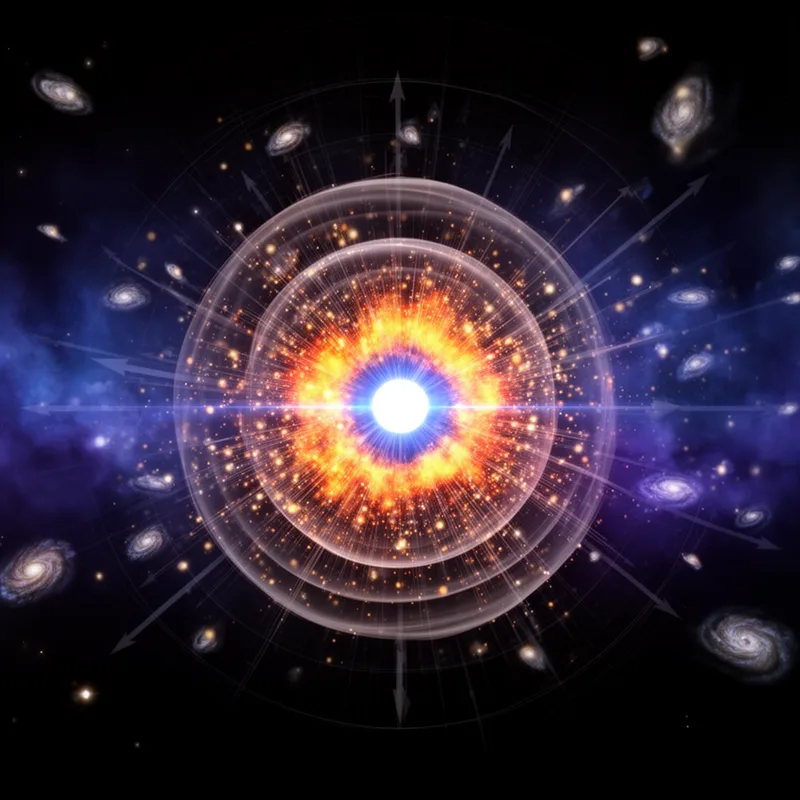
big-bang theory
- noun
- /bɪɡ bæŋ ˈθɪəri/
- Specialized
- Many scientists support the big-bang theory as the best explanation.
Examples
-
The big-bang theory is widely accepted among astronomers as the most plausible explanation for the origin of the universe.
-
The big-bang theory explains the origin of the universe.
-
According to the big-bang theory, the universe has been expanding since its formation billions of years ago.
-
Many documentaries explain the big-bang theory in simple terms for those new to cosmology.
-
The big-bang theory explains how the universe expanded from a small, hot point.
-
According to the big-bang theory, galaxies are moving away from each other as a result of the universe's expansion.
-
Scientists study the big-bang theory to understand the origins of the universe.
Synonyms
 4
4.1
4
4.1

An idea that the universe began when a hot, very dense point expanded quickly
Surface Forms
Morphology
big-bang + theory
The meaning is directly derivable from combining 'big' (large) + 'bang' (explosion/noise) with 'theory' (an explanatory framework): essentially a theory about a big explosion. This compositional sense is widely used and often borrowed across languages, so a B1 learner who knows the constituent words would reasonably infer the basic idea even if they lack technical cosmological detail.
Etymology
Big-bang theory The name big-bang theory was given by a scientist named Fred Hoyle who used the picture of a very small point making a huge explosion — a 'big bang' — to help people imagine that the universe began very small and very hot and then spread out. So, the phrase means the idea that the universe started with one great explosion and has been expanding since.