
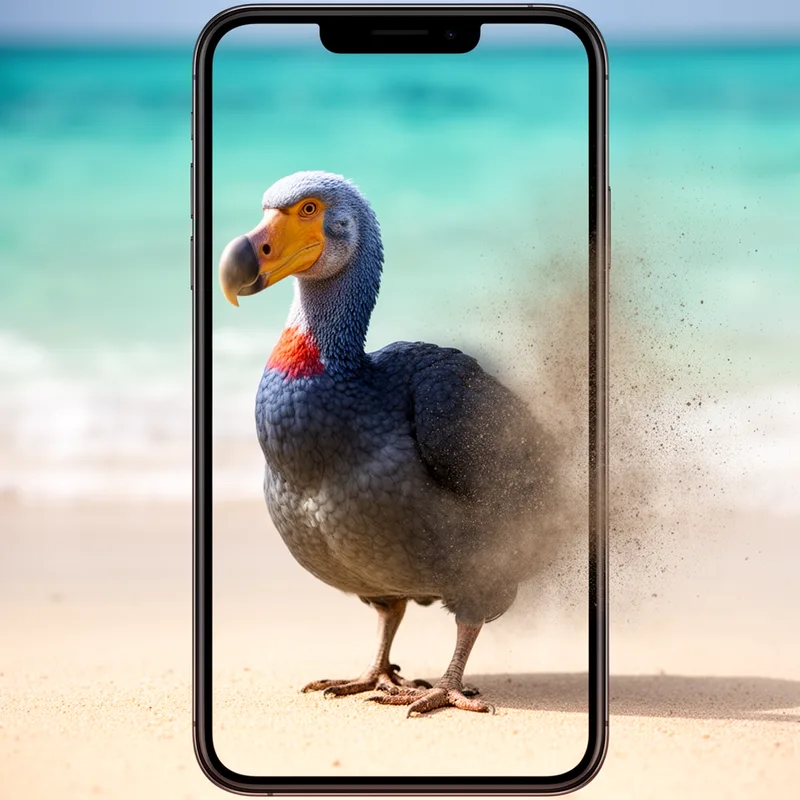
to become extinct
 15
4.5
15
4.5

- phrasal verb
- /bɪˈkʌm ɪkˈstɪŋkt/
- Many more varieties of life have become extinct than exist today on the earth.
- species become extinct
Loading YouTube…
Watch on YouTubeThe number of species that are becoming extinct is increasing rapidly and.
- The number of species that are becoming extinct is increasing rapidly and.
- And that's why we survived and they became extinct.
- And either we adapt or we, according to the Darwinian principles, we become extinct.
- When you begin to understand, for example, how the samurai became extinct, it was gunpowder, it was guns.
Examples
-
In fact, in the last few years 40 species have become extinct because of global warming.
-
First, species with small ranges may become extinct because all suitable habitat within their range is destroyed.
Academic text (1995) -
5% of species will become extinct.
-
You said they all became extinct?
-
Did you know that, on average, 74 species a day become extinct?
-
In recent years, the Black Rhino has become extinct, or is nearing extinction, in 12 African countries.
Academic text (2003) -
Most such megafauna became extinct at the end of the Pleistocene, about 10,000 years ago.
Academic text (2008) -
Play, a long-established hallmark in early childhood classrooms, is rapidly becoming extinct.
Academic text (2009) -
Do you know, in Africa, they kill thousands of rhinos a year, and they'll become extinct soon just because of how greedy mankind is at the moment.
-
In recent years, numerous species have become extinct due to habitat destruction.
Synonyms
 ∞
1.0
∞
1.0
To stop being seen or to no longer be there
 421
3.0
421
3.0
Disappear suddenly and completely for no clear reason
 47
3.7
47
3.7
To stop existing over time, for example animals or traditions
 21
5.8
21
5.8
Plants or animals gradually become fewer until none remain
 9
5.6
9
5.6
To slowly become weaker and then stop
 2
8.6
2
8.6
To stop being used and disappear completely
 1
8.1
1
8.1
Disappear completely so no one knows what happened and no sign is left
 1
8.2
1
8.2
People stop using something because new things replace it
Antonyms

How Endangered
15
4.5
 344
3.7
344
3.7
Surface Forms
Morphology
The phrase is compositionally transparent: 'become' indicates changing into a state and 'extinct' means having died out, so a learner who knows both words can readily infer 'to cease to exist as a species or phenomenon.' This is a common verb + adjective construction cross-linguistically, so its meaning should be clear to a B1 learner familiar with the constituents.
Etymology
The phrase become extinct comes from the image of a fire being put out: when a fire is extinct, with no flames, it stops burning and its light is gone. So, when an animal or language becomes extinct, it 'dies out' and no members are left.