
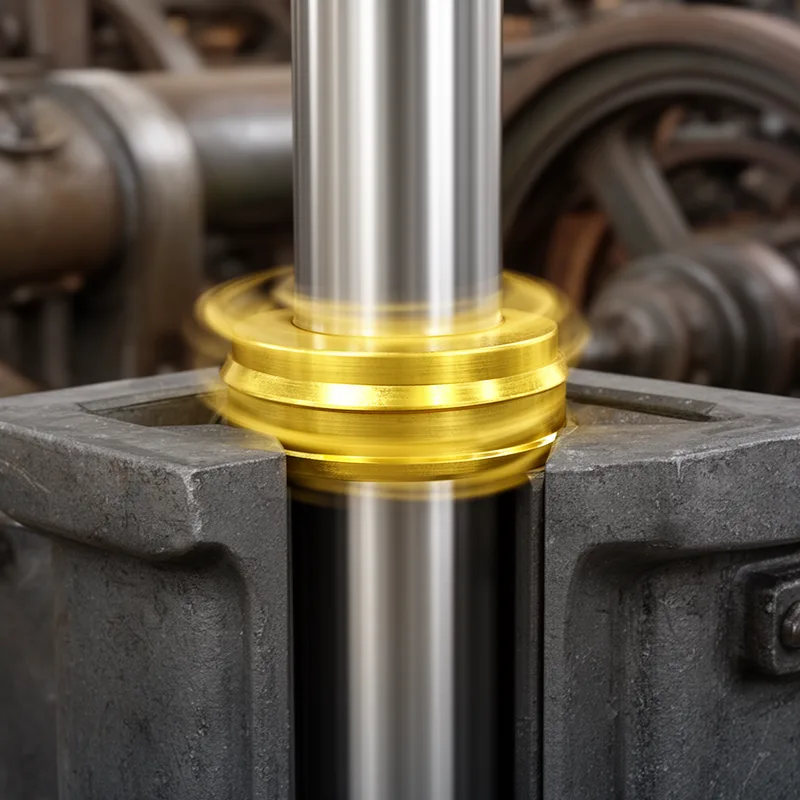
bearing brass
- noun
- /ˈbɛrɪŋ bræs/
- Specialized
- He carefully fitted the bearing brass into the housing before assembling the machinery.
Examples
-
Old steam engines often used bearing brass to ensure smooth rotation of the shafts.
-
The bearing brass needs to be replaced due to excessive wear.
-
The engineer selected high-quality bearing brass for the project.
-
Many machines use bearing brass to minimize wear.
-
To reduce friction, the mechanic replaced the worn-out bearing brass with a new one during the repair.
-
In high-performance engines, using quality bearing brass is essential for maintaining optimal efficiency.
-
The sliding parts were coated with bearing brass to prolong their lifespan and improve performance.
Synonyms
 1
8.2
1
8.2

A round sleeve in a hole that helps a shaft turn smoothly and reduces wear

A metal made by mixing metals that helps machine parts move smoothly
How Durable
38
3.7

- Specialized
- Specialized
- Specialized
1
8.2
- Specialized
Surface Forms
Morphology
The phrase simply names a material used in a bearing: combining 'bearing' (a part that enables smooth rotation) with 'brass' (a metal) yields 'brass used for a bearing or bearing lining.' This noun+material composition is straightforward and cross-linguistically common, so a B1 learner who knows both constituents would readily infer the intended technical meaning.
Etymology
Bearing brass comes from two simple ideas: bearing, a support that lets something turn, and brass, a yellow metal. It means 'a brass ring that fits around a moving rod to help it turn smoothly', so the phrase literally describes the metal lining used in a bearing.