
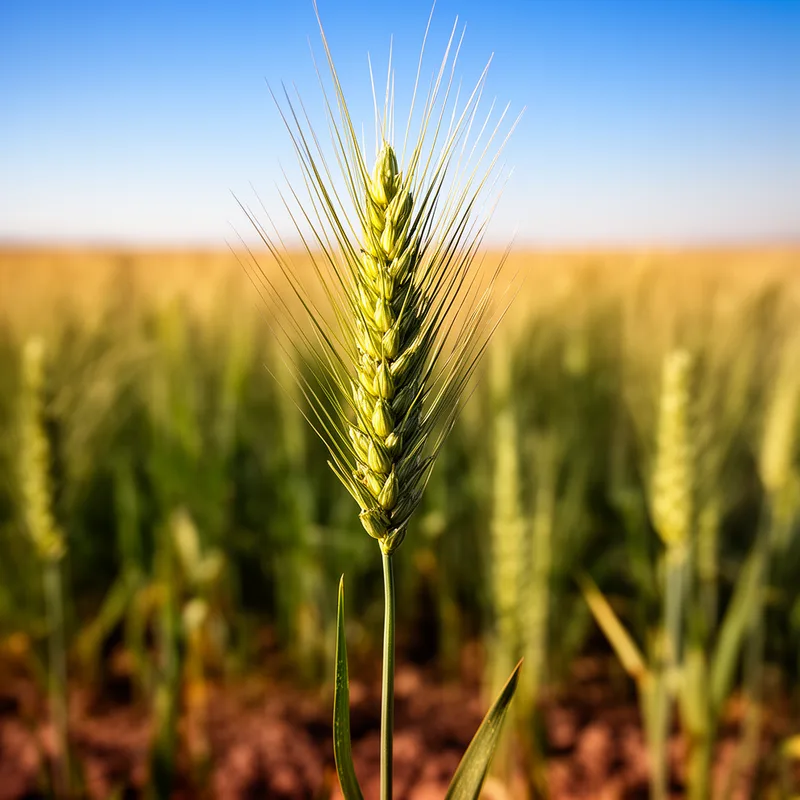
bearded wheatgrass
- noun
- Specialized
- The field was planted with bearded wheatgrass to prevent soil erosion.
Examples
-
Researchers are studying bearded wheatgrass for its drought resistance and adaptability.
-
Many farmers prefer bearded wheatgrass because of its robust growth and hardiness.
-
The bearded wheatgrass thrives in dry, sandy soils.
-
Farmers often plant bearded wheatgrass for erosion control.
-
Many farmers prefer bearded wheatgrass because it grows well in tough conditions.
-
Researchers are studying bearded wheatgrass to learn how it withstands drought.
-
The field was planted with bearded wheatgrass to help keep the soil in place.
Synonyms
A grass like wheat with straight bristles on its flower parts
Surface Forms
Morphology
bearded + wheatgrass
The noun phrase is compositional: 'bearded' (having bristle-like awns) modifies 'wheatgrass' (a grass related to wheat), so the meaning 'a type of wheatgrass with awns' is directly derivable from the constituents. This follows a standard adjective+noun composition and is a transparent botanical description that a B1 learner who knows the parts can infer, even if 'wheatgrass' is not listed separately in the provided dictionary entry.
Etymology
Bearded wheatgrass gets its name from the long, stiff bristles on its seed heads that look like a small beard. So the word bearded points to those bristles and the name means 'wheatgrass with a beard', which helps people tell this grass apart.

