
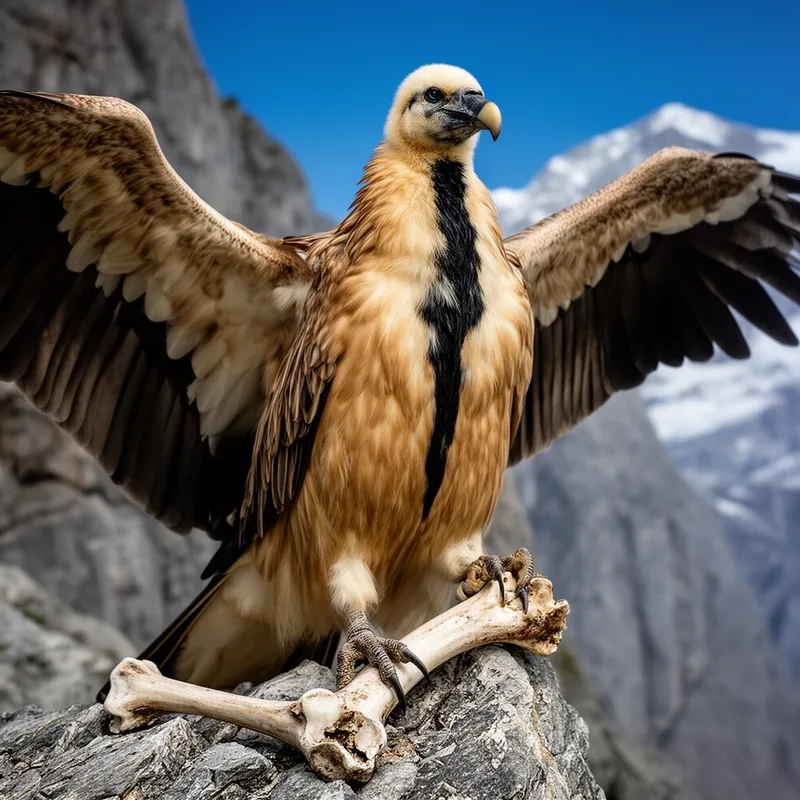
bearded vulture
- noun
- /ˈbɪrdɪd ˈvʌltʃər/
- Indian
- In the mountainous regions of Europe, the bearded vulture can often be spotted gliding gracefully through the air.
Examples
-
The bearded vulture is known for its habit of dropping bones from great heights to crack them open.
-
Hikers spotted a majestic bearded vulture soaring above the cliffs.
-
Conservation efforts have helped increase the bearded vulture population in the Alps.
-
The bearded vulture is known for its impressive wingspan.
-
In the Alps, the bearded vultures can often be seen soaring high.
-
The bearded vulture is known for its impressive wingspan and distinctive black beard of feathers.
-
Conservation efforts have helped the bearded vulture reclaim its place in the Alps after nearly disappearing from the area.
Synonyms
A large mountain vulture from Europe and Asia with dark feathers under its beak that eats bones
A large vulture with a black beard of feathers that lives in mountains
Surface Forms
Morphology
The phrase is compositional: 'bearded' simply modifies 'vulture' to indicate a vulture that has a beard (or beard-like feathers), so a learner who knows both words can infer the meaning. This attributive adjective + noun pattern is productive in English and common across languages (e.g. Spanish 'buitre barbudo'), making the expression transparently describable to a B1 learner.
Etymology
The noun bearded vulture comes from the dark feathers just under its beak that look like a small 'beard', and the words bearded and vulture show its look and that it is a scavenger bird. So the name points to the bird's beard-like feathers and helps you remember this species today.

