
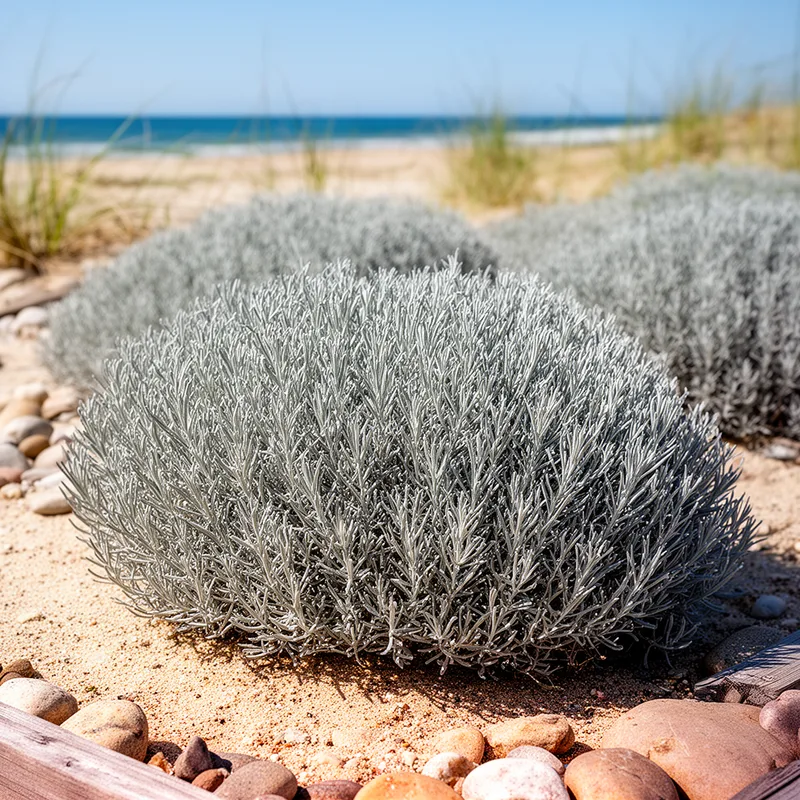
beach wormwood
- noun
- Specialized
- The coastal garden featured several beach wormwood plants with their distinctive silvery foliage.
Examples
-
Beach wormwood thrives in sandy soils along the eastern seaboard of North America.
-
Many landscapers use beach wormwood as an ornamental due to its attractive greyish leaves.
-
The beach wormwood thrives in sandy soil.
-
Many gardeners love the beach wormwood for its unique appearance.
-
In the coastal garden, the beach wormwood adds a touch of greyish foliage that complements the other plants.
-
Many gardeners use beach wormwood for its ornamental value and its ability to thrive in sandy soils.
-
The beach wormwood flourished under the sun, providing a beautiful contrast to the vibrant flowers nearby.
Synonyms

 5
8.9
5
8.9

A bitter plant with a strong smell used to make medicine and flavor drinks
 2
9.9
2
9.9
A small plant with grey leaves often grown in gardens
A low plant with soft silvery leaves often grown in gardens near the coast
Surface Forms
Morphology
The compound is a straightforward modifier + head construction: 'beach' specifies the habitat/type of 'wormwood', so the meaning (a wormwood that grows on or near beaches) is directly derivable from the constituents. This noun‑noun compounding pattern is common and cross-linguistically regular, so a B1 learner who knows both words would readily infer the intended referent.
Etymology
Beach wormwood comes from a simple picture: beach because it grows by the sea and wormwood because people long ago used 'bitter' plants like this to treat worms. So the name tells you it is a silvery, bitter herb that lives on sandy coasts.