

to be quiet
 445
1.0

- phrasal verb
- /bi ˈkwaɪət/
- The teacher told the students to be quiet while she explained the assignment.
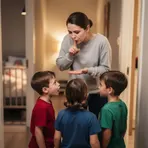
- tell someone to be quiet
- be quiet and listen
- just be quiet
Loading YouTube…
Watch on YouTubeOK, shut up, be quiet and start behaving.
- OK, shut up, be quiet and start behaving.
- You wait there, now you be quiet because I don't.
- Now, does that mean we have to be quiet all of the time?
- Be calm, be quiet, sit and wait with good manners.
- And in fact, she just needs to be quiet, and she's a movie star.
- And so if you are quiet, you are complicit.
- We always like to be quiet in what we do.
- And then some of those stop being quiet and expand.
- He said, well, he said if I'd been quiet, he wouldn't have been so angry.
- It takes, it takes me a long time to sit and be quiet and like really like focus.
- Sometimes brands get so popular that they can't be quiet anymore.
- What, like Kate will always tell us to be quiet?
- Anyway, sit and think, sit and feel, be quiet.
Examples
-
Now, be quiet.
-
During the movie, everyone was asked to be quiet so that we could enjoy the film.
-
Like, you know, just sit down and be quiet and listen and stop.
-
Now, does that mean we have to be quiet all of the time?
-
Okay, then why do I have to be quiet?
-
Then sit down and be quiet.
-
But she just asked us to be quiet nicely and told everyone to calm down.
Academic text (2014) -
So Auntie Morgan, just please be quiet because I need to sing.
-
Please be quiet!
-
Just be quiet.
Synonyms
 ∞
4.1
Tell someone to be quiet in a rude or angry way
 257
3.2
To make someone or something calm and less noisy
 208
2.5
To say nothing or not tell a secret
 177
3.5
To stop someone from speaking or making noise
 149
3.4
Make a person or thing quiet so others stop making noise
 54
2.0
Make people or things less noisy and less active
 44
3.4
Speak quietly so you do not disturb others
 31
7.1
To become quiet or tell someone to stop making noise
 20
5.0
Make someone stop talking and be quiet
 18
4.2
To make quiet or calm
 18
6.6
Stop talking suddenly because you are nervous or do not want to say anything
 15
7.1
To stop talking suddenly and not answer questions
 4
9.6
Refuse to speak or suddenly stop talking when asked
 3
7.5
Stay quiet about something private
 3
4.6
Make someone or something less noisy and calmer
 2
4.8
To stop talking and say nothing


 1
5.6
To say nothing to avoid trouble or keep a secret
 1
9.9
To stay silent on purpose to avoid trouble
 1
9.2
To tell someone to stop talking and be quiet
 1
4.4
To stop talking to keep a secret or when told to be quiet
 1
5.4
To stay silent to avoid saying something rude

To keep quiet on purpose and not tell others

To tell someone rudely to be quiet
Antonyms

How Quiet

Surface Forms
Morphology
The meaning 'to stop talking or remain silent' is directly and transparently derived from the copular verb 'be' combined with the adjective 'quiet' — a basic predicative construction that B1 learners already know. This pattern (imperative or stative 'be' + adjective) is common across languages and therefore immediately comprehensible to learners who know both words.
Etymology
Be quiet comes from the simple idea of asking someone to be in a state of quiet, like telling a noisy child to become calm and silent. So, when people say be quiet, they mean 'stop talking' or 'remain silent'.