
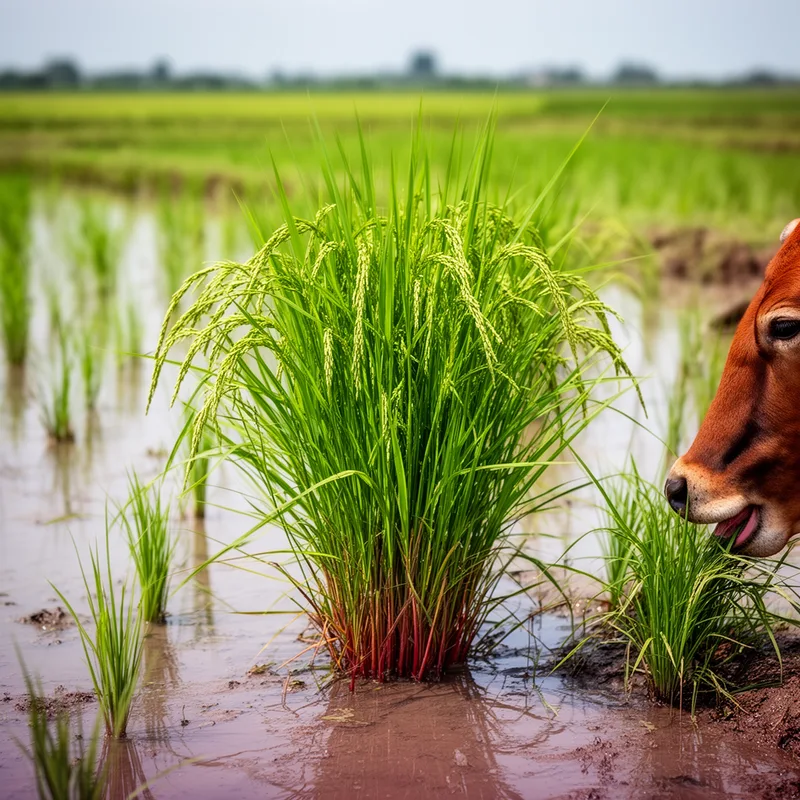
barnyard grass
- noun
- /ˈbɑrnˌjɑrd ɡræs/
- Specialized
- Some livestock will graze on barnyard grass when other forage is scarce.
Examples
-
The farmer spent days pulling barnyard grass from his rice paddies to prevent it from choking his crops.
-
The field was overrun with barnyard grass.
-
Barnyard grass thrives in wet, disturbed soils and can quickly overtake a field if not managed.
-
Farmers often struggle with barnyard grasses in their crops.
-
In spring, barnyard grass quickly fills the empty fields, making it a common sight in many rural areas.
-
Farmers often struggle to control barnyard grass, as it thrives in moist, cultivated soil.
-
During the summer, barnyard grass can become a problem for crops if left unchecked and can reduce yields.
Synonyms
A coarse grass that grows each year as a common weed worldwide and is sometimes used for animal feed

A common weed grass that farmers sometimes cut for hay or feed animals
A coarse annual grass with spikes of flowers that grows as a common weed

A rough grass that grows as a common yard weed with thin flower spikes
Surface Forms
Morphology
The compound is directly built from 'barnyard' (area near a barn) + 'grass' (plants), so the meaning — a type of grass associated with or found in barnyards/fields — is compositional and literal. There is no idiomatic or metaphorical shift, so a B1 learner who knows both constituents should understand the MWE.
Etymology
The name barnyard grass comes from a simple picture: this rough grass often grew in and around farm barnyards, where animals walked and the ground stayed wet. So today barnyard grass means that common rough 'weed' or grass people found near barns and sometimes used as 'food for animals'.

