
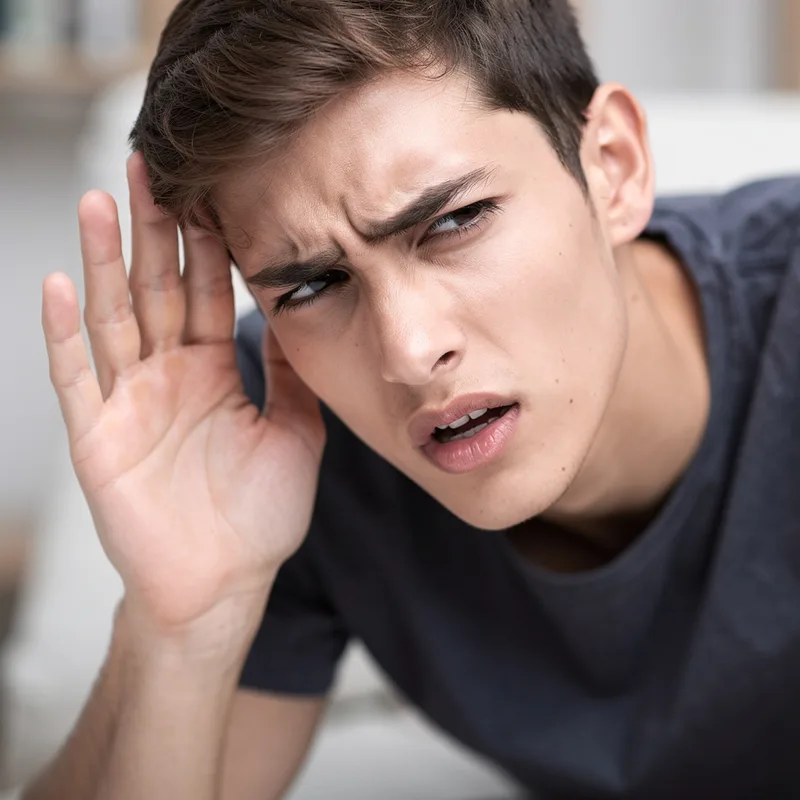
to barely hear
 20
3.6
20
3.6

- phrasal verb
- I can barely hear my heart beating.
Loading YouTube…
Watch on YouTubeIt's non functional but still works when you just go half a step up because it's so fast you can barely hear it.
- It's non functional but still works when you just go half a step up because it's so fast you can barely hear it.
- I'm getting anxiety like trying them all and I'm like hey, I could barely hear you bitches.
Examples
-
While the concert was loud, I could barely hear what my friend was saying.
-
I can barely hear you, Trevor.
-
Because I can barely hear you over the music.
-
I can barely hear you.
-
I could barely hear you.
-
When he spoke, his voice was so low that I could barely hear him.
Fiction book (1996) -
The ocean was still so far away they could barely hear the surf.
Fiction book (1996) -
Hal, I can barely hear you.
-
I yelled at him, but I could barely hear my own voice against the wind.
Fiction book (1999) -
But the sounds were muffled, and we could barely hear them.
Fiction book (1998)
Antonyms

How Well
∞
1.0
 20
3.6
20
3.6
Surface Forms
Morphology
The meaning 'to hear with great difficulty' is directly and transparently derived from combining 'barely' (by a very small margin) with 'hear' (perceive sounds), yielding 'almost not hear.' This adverb+verb compositional pattern is common in English and in many other languages, so a B1 learner who knows both constituents will readily infer the MWE meaning.
Etymology
The phrase barely hear comes from joining the words barely, which means 'only just', and hear. Imagine a tiny whisper or a distant voice so quiet you can almost not hear it, and that's why it means 'to hear with great difficulty'.