
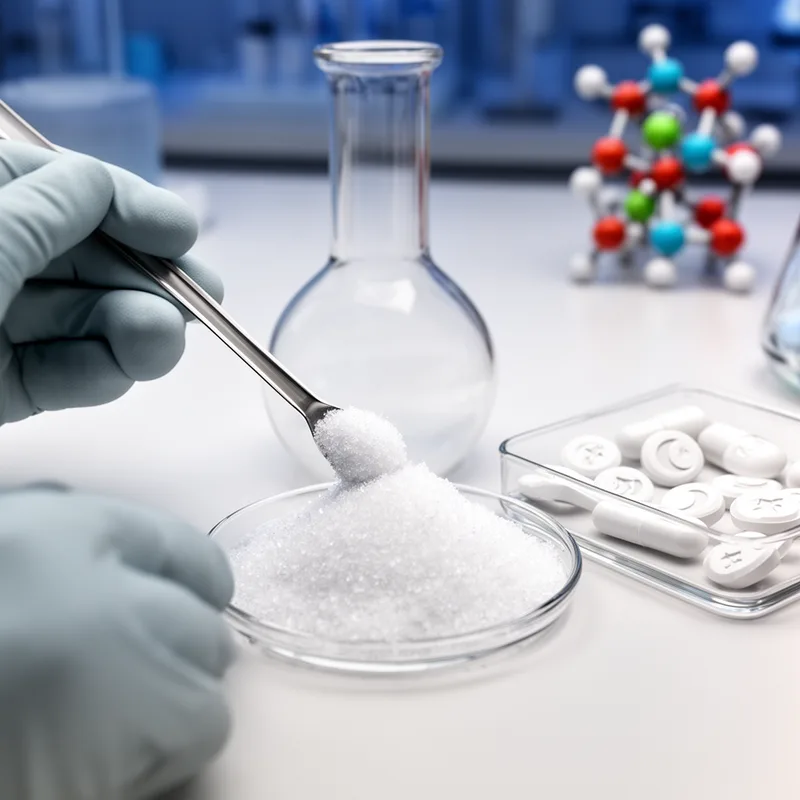
barbituric acid
- noun
- /bɑːrˈbɪtʃʊrɪk ˈæsɪd/
- Specialized
- Barbituric acid is not itself a sedative, but it is the parent compound of barbiturates.
Examples
-
The laboratory synthesized barbituric acid as a precursor to other pharmaceutical agents.
-
Chemists study barbituric acid to understand the structure of related drugs.
-
The chemist synthesized barbituric acid in the lab.
-
Many barbituric acids are used in pharmaceuticals.
-
Barbituric acid is an important compound used in the production of various sedative medications.
-
In the pharmaceutical industry, barbituric acid serves as a key ingredient for creating barbiturate drugs.
-
Researchers are investigating barbituric acid to develop new therapeutic agents for sleep disorders.
Synonyms
A white solid chemical that people use to make barbiturate drugs
Surface Forms
Morphology
barbituric + acid
This is a specialised chemical name: while 'acid' signals a type of substance, 'barbituric' is a technical adjectival form derived from ‘barbiturate’/chemical nomenclature and is not transparently analyzable by a B1 learner. The specific meaning (a particular pyrimidine-derived acid used to make barbiturate drugs) requires domain knowledge, so the overall sense cannot be derived from the parts.
Etymology
Barbituric acid is the 'parent' chemical of barbiturate drugs. Think of barbituric as the name that links it to barbiturates and acid as a simple white building block chemists use to make 'sleep medicines', so the name points to the basic substance used to make those drugs.

