
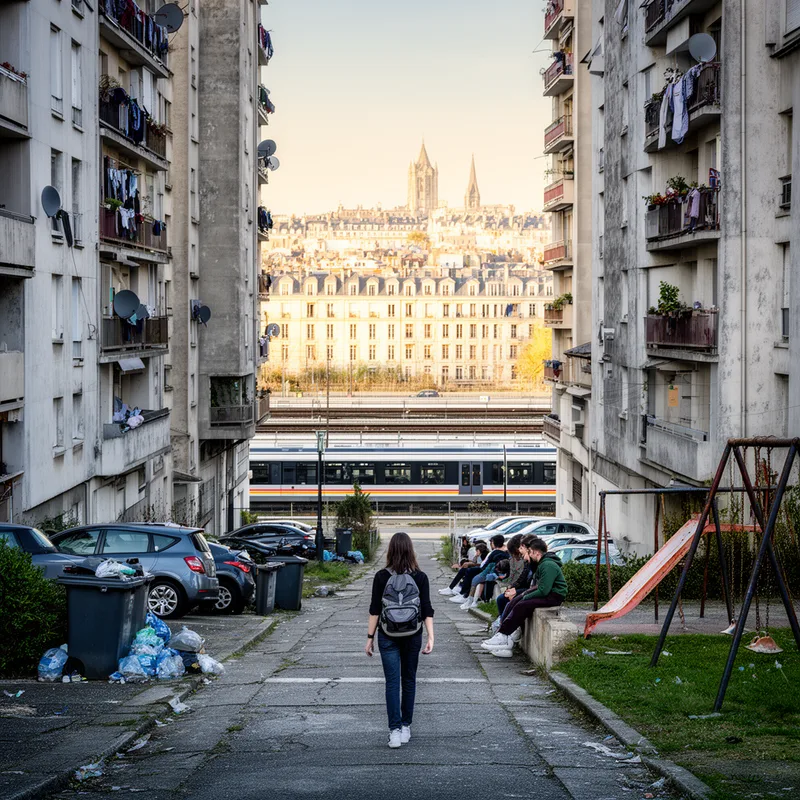
banlieue
 1
9.9
1
9.9

- noun
- /bɑːnˈljuː/
- Literature
- Mixed groups of teenagers—blacks, Arabs, and whites—then torched cars and vandalized schools in the banlieues.
Examples
-
Public services in the banlieue often struggle to keep up with the needs of the residents.
-
The cultural diversity in the banlieue enriches the city's overall character and vibrancy.
-
Before the year was out, flames were rising in the center of the city, and the banlieue problems spread like wildfire.
Academic text (2011) -
A second commission was established in 1876 to consider public buildings in the banlieue for decoration.
Academic text (1993) -
"It's just the banlieue working-class suburb," they said.
Academic text (2011) -
People are constantly in motion; public transportation carries passengers from banlieue to city centers, and neighborhoods are mixed.
Academic text (2011) -
Last year's riots have apparently driven up voter registration in the banlieues.
Academic text (2006) -
Many families in the Paris banlieue face economic challenges but work hard to improve their community.
Synonyms

An area near a town or city, often quieter than the center
Antonyms

How Urban

Surface Forms
Etymology
The word banlieue comes from two old French parts: ban meaning 'authority' or 'public order' and lieue meaning 'a league', an old measure of distance. It originally named the land just outside a city's official area — the place under the city's ban and a short distance away — so today banlieue means the suburbs outside a French city, sometimes linked with social or economic problems.