

ball fern
- noun
- Indian
- The ball fern thrives in humid, shaded forests throughout Malaysia.
Examples
-
Gardeners often choose the ball fern for its delicate, attractive foliage.
-
I saw a beautiful ball fern at the botanical garden.
-
Several species of ball fern are popular in Asian ornamental gardening.
-
The ball fern thrives in humid environments.
-
Gardeners often choose the ball fern for its delicate, attractive foliage.
-
The ball fern thrives in humid, shaded forests throughout Malaysia.
-
Several species of ball fern are popular in Asian ornamental gardening.
Synonyms
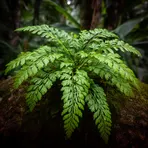
A feathery fern with delicate divided leaves that grows in tropical Asia

A feathery fern from tropical Asia and Malaysia that people grow for its pretty leaves
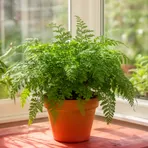
A feathery fern from tropical Asia often grown as a house or garden plant

A feathery fern with soft furry underground stems that look like a squirrel's foot
Surface Forms
Morphology
This is a descriptive noun–noun compound: combining 'ball' (spherical object) with 'fern' yields a fern that is ball-shaped or has a rounded growth form. The meaning is compositionally predictable from the parts and follows a common cross-linguistic pattern, so a B1 learner who knows both words would readily infer the MWE's meaning.
Etymology
Ball fern comes from the way this fern grows in round, soft clumps. People used ball to describe the 'ball-like' shape and fern for the plant, so the name helps you picture the plant today.

