
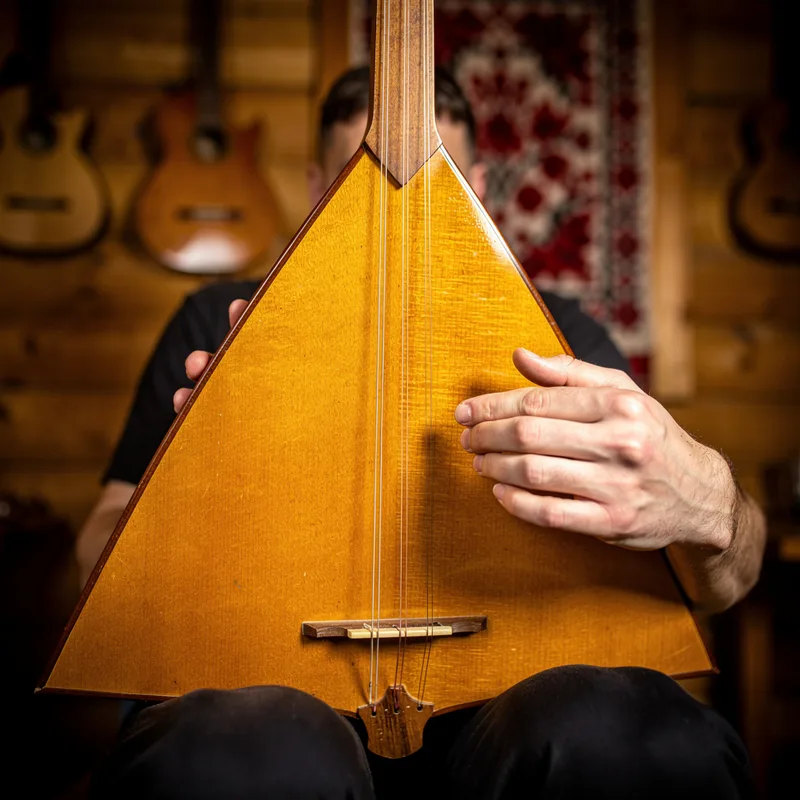
balalaika
 2
9.8

- noun
- /ˌbɑːləˈlaɪkə/
- The musician skillfully played his balalaika during the concert, captivating the audience with its unique sound.
- play the balalaika
- balalaika music
Examples
-
"And have the boy play the balalaika."
Fiction book (2002) -
Clapping at the singing, they called to the boy, "Jochi, Jochi, play your balalaika for us."
Fiction book (2002) -
Can you play the balalaika?
-
And he came to her, tender and eager at the same time, setting down the balalaika and taking her in his big, firm hands.
Fiction book (2002) -
Seeing Jochi's long, strong fingers on the balalaika frets made her want to kiss the tips.
Fiction book (2002) -
"What does m'lady wish to hear?" Jochi asked, his balalaika tuned and ready, no longer looking embarrassed.
Fiction book (2002) -
Sitting on a bench beneath the cherry trees in a little garden with a brown fence, a sailor basked in the sun and played a balalaika.
Fiction book (2001) -
Producing his balalaika, Jochi played her Kazak tunes that sounded like wind singing through the grass tops or tinkling caravan bells.
Fiction book (2002) -
For somewhere in Chekhov, apple trees, late in April, are seen to blossom in a cemetery by people who are happy for the time, on horseback; so, trotting on and past, they hear, not far off, the globular strumming of a balalaika.
Fiction book (2000) -
At the festival, a group of performers showcased traditional Russian dances accompanied by balalaika music.
Surface Forms
Etymology
Balalaika comes from Russian and likely began as a simple village name that copies the instrument's lively, 'chattering' sound. That's why balalaika now means the triangular, three‑stringed folk instrument often played by plucking or strumming.