
bagasse
 1
9.9

- noun
- /bəˈɡæs/
- Specialized
- Biomass products, mostly bagasse, but also some fuelwood and charcoal, provide the lion's share of domestic production of primary energy.
- sugarcane bagasse
- cane bagasse
- sugar cane bagasse
Examples
-
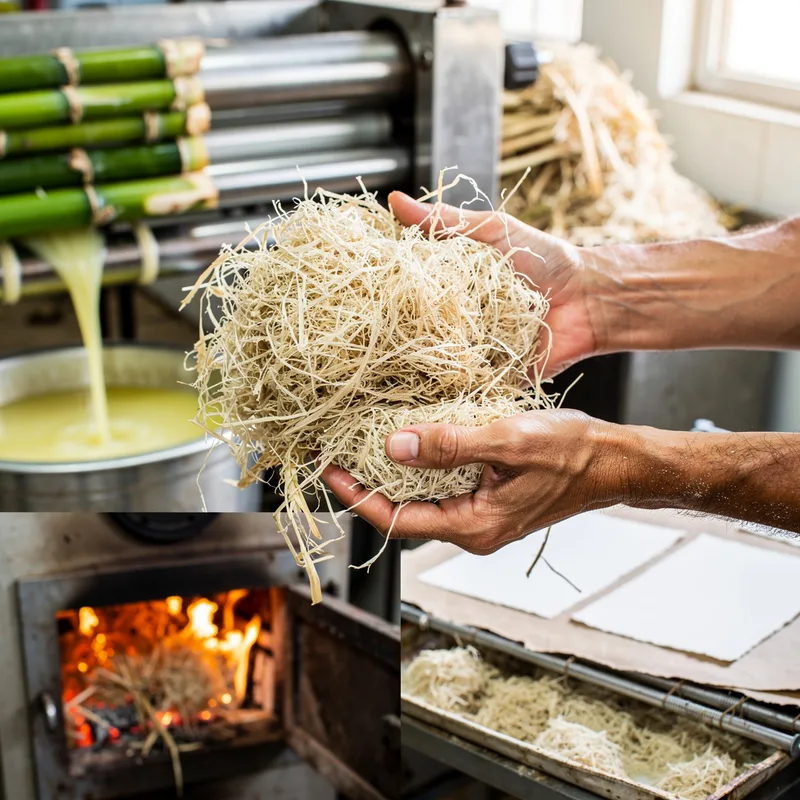
For all operations, the energy is supplied by the burning of bagasse, which is the sugarcane waste left after the juice is extracted.
Academic text (2006) -
The Louisiana ethanol plant will run on bagasse and rice hulls and could include sawdust in the future.
Academic text (1998) -
The bagasse has another 35% of the energy (and includes bagasse from sugar production).
Blog text (29) -
Boilers are powered by burning bagasse, but this energy input is not counted.
Blog text (32) -
The World Bank and GEF are contributing to a multifaceted strategy to increase bagasse-generated electricity in this island nation.
Academic text (1995) -
Materials such as sawdust, palm oil empty bunches, and bagasse need nitrogen sources to accelerate the composting process.
Academic text (1998) -
Use of sugar cane waste (bagasse) is significant in sugar-producing regions, including Brazil, Colombia, Cuba, India, the Philippines, and Thailand.
Academic text (2006) -
Agricultural residues such as corn stover, sugar cane bagasse, and rice hulls may be the most extensively studied sources of biomass.
Academic text (2001) -
Burning the bagasse that resulted from crushing the harvested sugarcane generates 5.17 GJ.
Academic text (2006) -
The demonstration plant will produce cellulosic sugars from sugarcane bagasse, the fibrous by-product of sugarcane juice extraction.
Surface Forms
Etymology
Bagasse comes from French and Portuguese words for the 'leftover' fibre after plants are pressed for their juice. So think of bagasse as the dry, fibrous 'leftovers' from sugar cane that can be burned for fuel or turned into paper.